
How much does a holiday in Greece cost today? Can one still visit this wonderful country, so dear to tourists, without spending a fortune, or have the enchanting Aegean beaches and the beauty of antiquity become a luxury beyond the reach of those on an average salary?
We have good news: Greece is still a destination for everyone. The days of hippies travelling the length and breadth of Greece on a dime are over, but neither is it necessary to resign oneself to shelling out for the expensive luxury hotels that have made islands like Santorini and Mykonos famous.
Thanks to the multitude of locations suitable for a wonderful holiday and its highly developed tourist industry, this country offers many different possibilities to suit everyone’s pocket.
Another piece of good news for those who have to be careful about the cost of their holiday is that in Greece it is possible to have a low-cost trip without having to adapt to uncomfortable solutions such as free camping (which, let us remind you, is not allowed in many resorts). You just need to organise your holiday carefully!
In this mini-guide to the average cost of a week’s holiday in Greece, you will find all the information you need: what influences the cost of your holiday the most, indicative prices, tips for saving money.
What factors affect the price of a holiday in Greece? Let’s look at them together one by one: knowing them will help you organise your holiday according to the money you are willing to spend.

One of the biggest factors that can vary the cost of a holiday in Greece is the choice of destination. Generally speaking, it works like this: locations that are well known to international tourism are the most expensive, while those that are little known or frequented mostly by Greek tourists have more affordable prices.
This is not a golden rule; there are exceptions. For instance, the island of Kea, although almost unknown to many tourists, is not a low-cost destination. Its proximity to the mainland, and in particular to the capital, means that the island is much frequented by wealthy Athenians who have bought their second home here; the few holiday accommodations on the island are almost all in the medium-high price bracket.
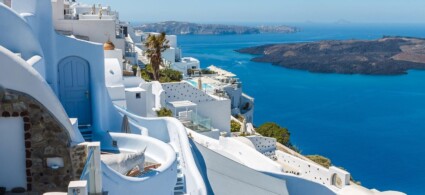
Speaking of islands, the most expensive ones are Santorini and Mykonos: they are the two most visited Greek islands and have long focused on exclusive tourism based on luxurious designer hotels and glamorous experiences.
Again, however, Santorini and Mykonos = spending a lot is not a mathematical equation. Precisely because they are so famous and desirable, the two stars of Greek tourism have developed a solid hotel industry that includes both the well-known luxury options that appear on the covers of tourist magazines and cheap alternatives for much less demanding tourists. In fact, it is much easier to find a hostel on these two crowded islands than on those ignored by mass tourism.
At this point you are a little confused and wondering how to choose? Don’t panic, just don’t be guided by hearsay and widespread misconceptions.
Gather reliable information on several locations and narrow down your choice to those within your budget. This way, you are sure to go on holiday to the right location for what you want to spend.
Another factor that greatly affects the cost of the holiday is the period. Greece is mainly famous for beach holidays, so thehigh season is concentrated in the summer months. In July and August, flight, ferry and especially hotel prices peak, so if you want to save money and can choose when to go to Greece, travel outside of these two months.
June and September are considered mid-season periods. Prices already drop a lot, but the period is still ideal for a beach holiday because Greece’s beautiful climate allows you to swim and enjoy the sun in the early and late summer.
With a little luck, one can go swimming as early as May and even as late as October, which are considered low season months. This is the best time for those who want to spend less.
If instead of a beach holiday you want a cultural holiday, consider other periods. Athens can be visited all year round and so can other cities famous for cultural attractions.
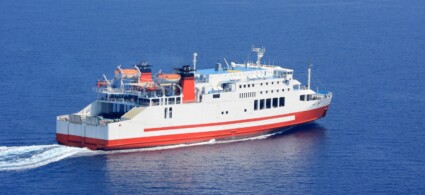
Is it cheaper to go to Greece by plane or by ferry? There is no single answer, it depends a lot on where you want to go.
Is there an airport on the island? Is the airport served by direct flights? If the answer is yes to both questions, then the cheapest way is most probably by plane.
The easiest islands to reach by plane are the best known ones, e.g. Rhodes, the aforementioned Santorini and Mykonos and Corfu.
In all other cases, it is necessary to find out about the different options available and compare the total cost of each one considering all the travel included in the trip.
Sometimes it is better to take a low-cost flight to Athens and then reach your destination on a second flight or by ferry. Other times it is better to arrive in Greece by ferry and then take a second ferry: be careful, however, because, with the exception of the Ionian Islands, this solution implies a car journey of hundreds of kilometres to go from the first to the second port.
When making your choice, do not rely solely on the fares. Consider well the days and times of departure of the various means of transport and all travel times. This is very important, especially if you want to visit lesser-known islands: some Greek islands even in the summer months are not served by daily connections.
This information will help you determine whether you have sufficient time for travel between ports and airports; if this is not the case, you should add to the cost of transport an overnight stay of at least one night between arrival in Greece and departure for the place where you are going to stay.
Do you like to sleep comfortably and be waited on hand and foot? Or are you content with a clean, no-frills room? The price difference between a luxury hotel and a budget guesthouse is really big, so choosing to sleep in one rather than another can mean hundreds of euros more or less to shell out.
In general, sleeping in Greece has an average cost, neither surprisingly cheap nor exorbitantly expensive. Being a very touristically developed country, it offers holiday accommodation in all price ranges, with more or less choice upwards or downwards depending on the location. Regardless of the category, the quality in terms of cleanliness and services is usually good.
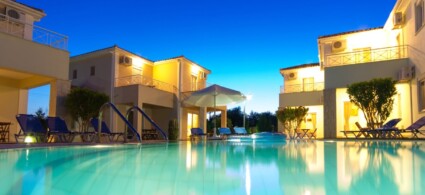
On all islands and in many locations in mainland Greece, studios, i.e. studios with a kitchenette that are characterised by excellent value for money, are widespread. They are pretty, they are typical, they are comfortable and they are usually cheap: an unbeatable solution for those who want to have a cheap holiday without sacrificing comfort.
Even cheaper are the campsites, which are very present in some areas and almost or completely absent in others. In this case, however, a little spirit of adaptation is required, plus you need to bring all your equipment from home.
If, on the other hand, you like to treat yourself well, especially when it comes to quantities of food and drinks, the best choice for you is an all-inclusive resort.
Greeks love to eat well. It is therefore possible to have a quality meal without spending a fortune: 20 euros is enough for a hearty dinner in a typical taverna.
This figure can go up considerably if you dine in a fancy restaurant; conversely, you can eat for a handful of euros by opting for the ubiquitous gyros pita or other forms of street food.
Having exhausted the list of essentials, one must also think about the extras: after all, when talking about holidays, these are also indispensable, right?
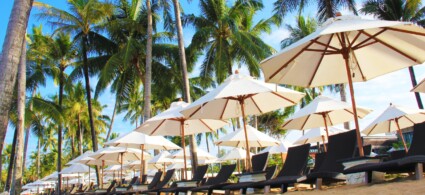
Parasols and sunbeds are almost always free of charge: in some cases the hotel offers them free of charge, in others you can use them at no cost by ordering a drink at a beach bar. Where they are charged, the price is very affordable.
Tours are one item that can raise the cost of a holiday considerably, but it would be a shame to pass up a boat trip or a guided tour of an important cultural attraction.
Group tours are cheaper than private tours; other factors affecting the price are the duration of the tour and the services included (e.g. aperitifs or dinners with drinks included or excluded and pick-up at the hotel).
Entrance fees for the most important museums and monuments, e.g. the Acropolis in Athens, are charged. The cost varies from a few euros up to twenty.
As is evident from the list of factors we have just listed, it is impossible to give a precise indication of how much a holiday in Greece costs. You can, however, make a rough calculation to get an idea of how much you can go and spend.
As a guide, let us see the possible cost of a one-week holiday in Greece.
Let’s assume an average standard holiday (3-star facilities) for two people in July-August with arrival by plane.
The cost items could be
Total for two people, including 7 days car hire and 2 tours: from a minimum of € 1040 to a maximum of € 2320 (per person from € 520 to € 1160).
Of course, by making the appropriate choices, you can spend much more or much less.
After having seen why the cost of a holiday in Greece can vary so much and the average prices for a one-week holiday in August, let’s look at some tricks to spend less.
First of all, a tip that applies to any other destination also applies to Greece: book as early as possible. Flights and ferries offer discounted rates to those who book well in advance; cheap accommodation is usually the first to run out of rooms so to grab one you should start looking early.
Another trick for all destinations, including Greece, is to buy tickets for popular attractions online. Online tickets allow you to save a couple of euros on the full price, plus they have the advantage of skipping the queue at the ticket offices.
Another good practice for a cheap holiday is to book a flat instead of a hotel room. Having a fully equipped kitchen at your disposal saves you having to go to a restaurant every night – a big saving!
A specific tip for Greece, on the other hand, is to broaden the range of places to consider as a base for your holiday.
International tourists favour the islands, ignoring the fact that mainland Greece is also full of interesting attractions, including magnificent beaches that have nothing to envy from the Cyclades, the Ionian Islands or other archipelagos.
Take a look at lesser-known destinations: you might find a hotel by are much cheaper than the chic villas on the more popular islands.






 Hotel
Hotel  Budget accommodations
  Apartments
  Family Hotel
 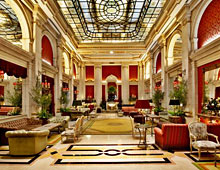 Luxury Hotel
 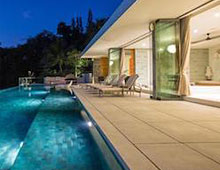 Resorts