Bestseller
Civitatis Travel Insurance
From 9,80 €
Buy the ticket
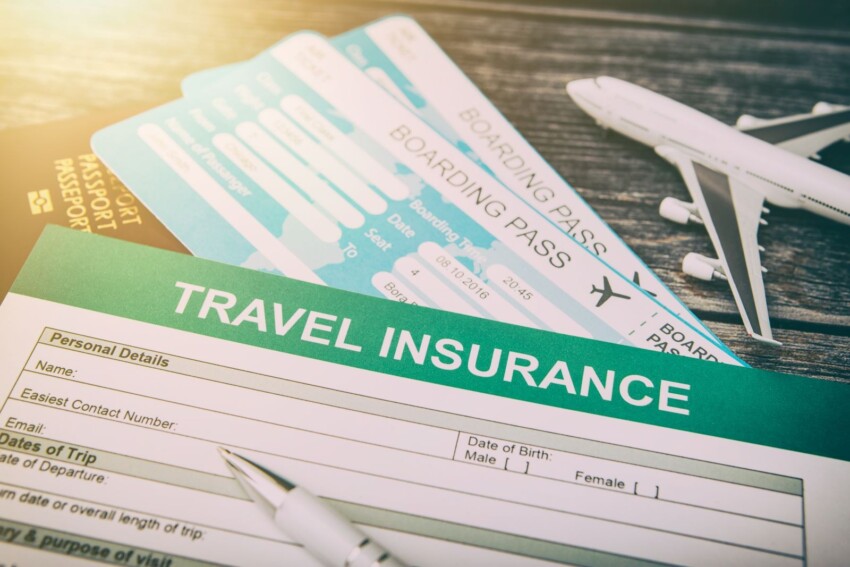
Greece is undoubtedly one of the favourite destinations for tourists when it comes to a holiday abroad. A mild and sunny climate, paradisiacal beaches and a thousand-year-old history are just some of the ingredients that make a holiday in this country a truly perfect experience. But when travelling, when aiming for perfection, one also tries to minimise risks or unforeseen events, which is why, although the country is safe and quiet, we always recommend taking out travel insurance before departure.
Taking out insurance for Greece may seem misleading, as it is in any case part of the European Union and in case of hospitalisation you are entitled to free medical care thanks to our health card, which is valid in all EU countries. But often, especially if you go to the islands, the medical facilities are small and inadequate for serious illnesses, so you should be transferred by boat or plane to Athens or Thessaloniki, at your own expense and with the urgency your case deserves. But that’s not all: once you arrive at your destination, you will discover that the public hospitals in these two metropolises are very often inadequate, due to the huge number of people the medical staff has to manage on a daily basis; therefore, it is better to be treated in a private clinic for a fee. And this is where travel insurance comes in: medical expenses, treatment and clinic stays will be covered and you can think about getting well without having to worry about your wallet.
But taking out insurance does not only mean peace of mind from a health point of view: in fact, although Greece is peaceful and quiet, in the big cities, especially in the more touristy areas of Athens, incidents of petty crime are not uncommon. Getting mugged or robbed on holiday is a bad situation, but with travel insurance you can get away with it without too many side effects. And finally, you can always risk having your flight cancelled, your luggage lost or stolen, or you can get into an accident with a rented vehicle: all issues that travel insurance handles completely, for your peace of mind and that of your travelling companions.
In addition to insurance, you should contact your country’s embassy in Athens if you have any problems, while below is a list of emergency phone numbers that can always come in handy in the event of a problem: 166 for first aid, 100 for the police, 199 for the fire brigade, 1571 for the tourist police, 1016 for emergency doctors for home visits, and finally 1434 for hospitals and pharmacies on call.
The list of travel insurance for Greece is extensive, and thanks to the fact that companies know the country is safe, the costs are never too high. Consider which one to choose according to your budget, but at the same time look for a policy that offers adequate coverage. The first thing to consider is assistance in your language, which should be answered by the 24/7 operations centre. If you do not have this guarantee, try to find out whether or not you can waive it.
Another parameter to consider when choosing a travel insurance policy is the deductible, i.e. the overdraft, which will be the cost you will have to pay. With a surcharge you can lower it or zero it, but again the choice is up to you. Finally, assess the insurance ceiling, i.e. the maximum amount that the policy will pay you in the event of unexpected situations, damage or illness.
And as mentioned, carefully consider a policy that adequately covers medical and hospital expenses. Here companies operate in two alternative ways: you can choose insurance with direct reimbursement, or with deferred reimbursement. The first situation is the best choice, as the doctor’s or hospital bill will be paid directly to the company, which will settle it without you having to do anything, let alone pay any money. The second, usually cheaper, involves you paying the hospital or the drugs, and then applying to the insurance company to reimburse you. Keep in mind that from payment to reimbursement can take several weeks, sometimes even months.
As a final parameter to consider for the best travel insurance for Greece, there is the number of holidays or trips you take in a calendar year. In fact, if in addition to your holiday on Greek soil you plan to travel further during the year, consider purchasing an annual multi-trip insurance policy, so that you can greatly absorb the expense of several individual insurances, and not have to worry about paying and renewing each time. Conversely, if you will not be visiting other countries during the year besides Greece, proceed without hesitation to purchase a single policy.
As you will have realised by now, having insurance before a trip to Greece allows you to leave with peace of mind and without worrying about problems that might occur during your holiday. Hiccups are always just around the corner, and here you will find out what they are and how an insurance can help you.
As mentioned, the standard health card allows EU citizens access to public hospitals without paying anything. However, public hospitals in Greece are often crowded, either because of the size of the city if you are in Athens or Thessaloniki, or because of the massive influx of tourists to the islands. Therefore, it may be difficult to get the care you need, also because hospitals on the islands are not able to treat the most serious cases. Travelling to Greece with travel insurance therefore allows you access to private clinics and specialised doctors, as well as giving you the possibility of covering the eventual air transfer to your country, even by air ambulance.
When it comes to travel insurance, assistance is among the first parameters to be assessed. Having an operations centre at your disposal that remains active 24 hours a day, 7 days a week protects you from any problems you may have: just one phone call, or visit a website, and you will be in direct contact with an operator who speaks your language. The operations centre can also provide translation and interpretation services, which are very convenient when you are unable to communicate in your own language or English with locals or medical staff.
A big advantage of being able to take out travel insurance for Greece is that you will be able to claim reimbursement in the event of flight cancellation by the airline, or in the event of cancellation due to force majeure or illness occurring prior to departure to one of the passengers. Without insurance, if you are unable to travel, you will lose the money you spent on the ticket: this does not apply if you are insured. You will then be entitled to a refund, either in full or in part depending on the strength of your insurance cover, provided that you can prove that the flight cancellation was necessary.
Another case that might occur is that of flight cancellation by the airline. In this case, you will be able to have your ticket reimbursed in no time at all, thus being able to re-arrange your trip with other companies.
Finally, imagine arriving at the airport in Athens, Thessaloniki or the Greek island of your choice, walking up to the baggage reclaim belt and seeing the suitcases of all the other passengers turn around except yours. When this situation happens, the first reaction is to panic, but thanks to insurance cover against lost luggage, you can safely leave the airport and go and buy the basic necessities you need, which will be reimbursed.
Another problem that can happen is when your luggage arrives at the baggage reclaim belts broken or damaged. With baggage protection insurance, you will be reimbursed the cost of a new suitcase in such cases.
The health situation in Greece is good, the care is more than decent, but let us again remind you that public hospitals can be very often crowded, especially during the high season when – in spite of themselves – the facilities are crowded with tourists for the most varied problems, from the most trivial to the most serious. Moreover, the small hospitals on the islands hardly have the machinery and equipment to treat the most serious illnesses. In addition, emergency rooms in public hospitals are available in shifts, which is often insufficient during the summer period.
It must be said that very often the medical staff knows English, but of course this is not a guarantee. Pharmacists also often speak English, but pharmacies also work in shifts and most of them are closed on Monday and Wednesday afternoons, and on Saturdays and Sundays even in the summer.
The only disease to watch out for during your holiday in Greece is the Nile Virus, which is transmitted by bites from infected mosquitoes. The disease, which occurred in past summers and autumns, has now become endemic and is widespread in the country. Otherwise, there are no diseases to worry about.
No vaccinations are required for Greece.
Safety in Greece is good, although there is always a risk of demonstrations and strikes by civil servants in the country, which have sometimes resulted in clashes and violence. The areas in Athens to watch out for are Syntagma Square, where the Greek parliament is located and where almost all demonstrations take place, and Omonia Square and adjacent areas. Pay attention to the warnings issued by the local police in case you find yourself in the middle of any such gathering. Communal crime remains low, although in the more touristy areas (including the islands) you should be alert for incidents of petty crime against tourists, with thefts of wallets and documents.
As far as terrorist attacks are concerned, the risk of attacks in Greece is no greater than in other European countries. In the country, however, one must beware of the forces of nature: it is characterised by a high level of seismic activity, and in recent summers there have also been particularly violent fires, with casualties among tourists and locals. Caution is therefore recommended, especially in forested areas.
Finally, a few words about renting: in Greece, as you know, many tourists rent scooters or quads. You must use the case, and be aware that accidents are frequent, also due to the precarious maintenance of the roads and the wear and tear on rented vehicles. Quads cannot circulate on paved roads and spaces, although this rule is practically ignored by all tourists and omitted by all renters. ATVs are considered an extreme sport, and many insurance policies have specific exclusion clauses for accidents or deaths occurring on board these vehicles.
 Hotel
Hotel  Budget accommodations
  Apartments
  Family Hotel
  Luxury Hotel
  Resorts