Greek Moussaka: the Original Recipe, History, and Variations
Moussaka is the signature dish of Greek cuisine: where to eat it in Greece, regional variants and the complete traditional recipe for preparing it at home as in authentic taverns.
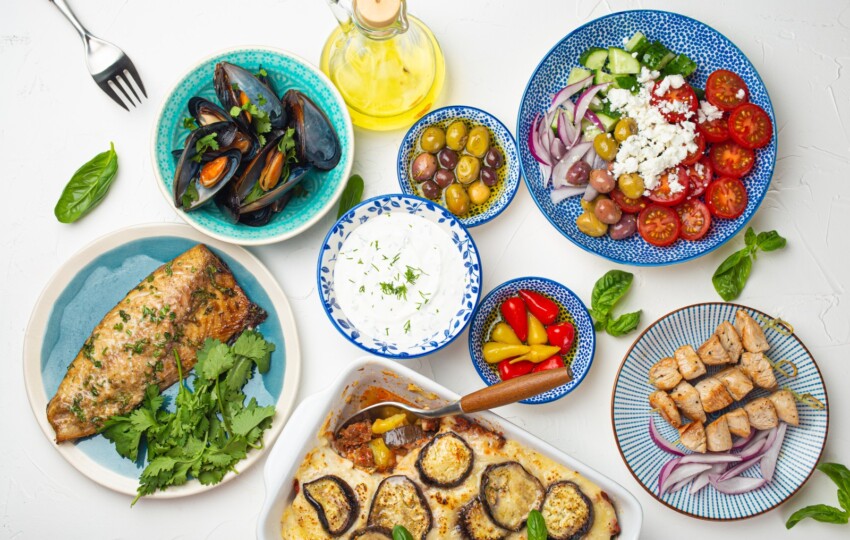
Greek cuisine is one of the fundamental pillars of the Mediterranean diet, recognised by UNESCO as an intangible cultural heritage of humanity. A trip to Greece cannot be complete without tasting its traditional dishes, whose recipes have been handed down through generations and tell the story of this fascinating country.
During your stay on Greek soil, you will discover that Greek gastronomy is based on simple but high-quality ingredients: extra virgin olive oil, fresh vegetables, aromatic herbs, local cheeses, fresh fish and meat prepared according to ancient traditions. Each region of the country boasts its own culinary specialities, making each stage of your trip a unique gastronomic experience.
In this article, we will guide you through the unmissable dishes of Greek cuisine, from famous national specialities to lesser-known but equally delicious preparations. We will provide you with information on their history, the main ingredients and where best to taste them, to turn your trip into an authentic flavour adventure.
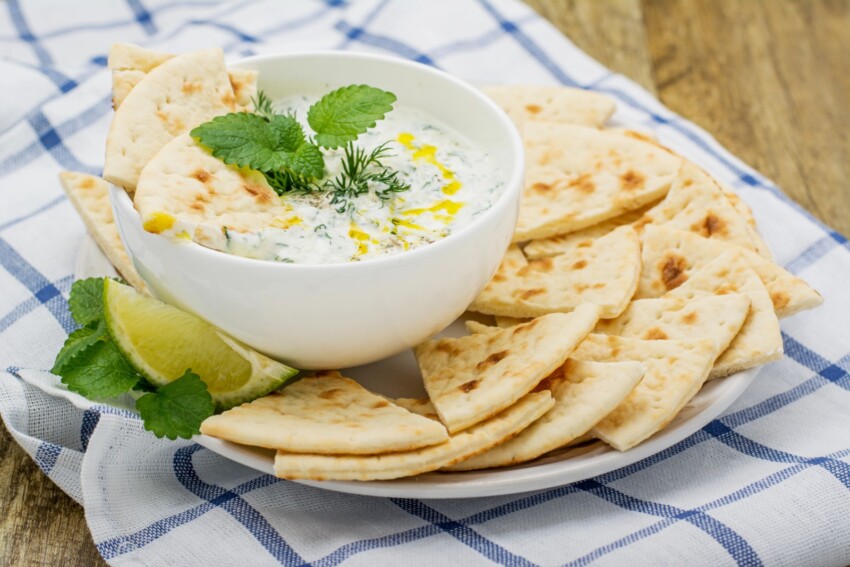
Mezedes represent the essence of Greek conviviality: small dishes to share that anticipate the main meal or become a way of dining themselves.
Tzatziki is probably one of the most internationally known Greek recipes. This cool and creamy sauce is prepared with thick Greek yoghurt, grated cucumbers, garlic, olive oil, vinegar and dill. Traditionally served as an appetiser or accompaniment, tzatziki has ancient origins dating back to Byzantine times.
To enjoy an authentic tzatziki, make sure it is made with real Greek yoghurt, which is significantly thicker and creamier than ordinary yoghurt. Greeks serve it cold, often as part of an assortment of mezedes (appetisers) to share, accompanied by warm pita bread.
Taramosalata is a savoury cream made from fish eggs (tarama), soaked bread, olive oil, lemon and onions. Its characteristic pale pink colour and delicately savoury flavour make it a popular starter, especially in coastal restaurants.
This dish has its roots in the culinary traditions of Greek fishing communities, where it was a clever way to utilise valuable fish eggs. Today it is mainly served as part of mezedes, spread on bread or accompanied by raw vegetables.
Dolmades are vine leaf rolls stuffed with rice, onion, dill, mint and spices. This preparation, which has a history stretching back thousands of years, reflects Ottoman influences in Greek cuisine and is found in similar variations throughout the eastern Mediterranean.
Dolmades are served either as a cold starter, dressed with olive oil and lemon, or as a hot main dish, often accompanied by an egg and lemon sauce called avgolemono. In traditional taverns, you can find them handcrafted according to family recipes handed down from generation to generation.
The term saganaki refers to the method of cooking in a small two-handled pan called ‘sagani’. The most famous is the cheese saganaki, prepared with hard Greek cheeses such as kefalograviera, graviera or halloumi, floured and fried to a golden crust and a soft, stringy interior.
In some taverns, saganaki is flambéed at the table with a dash of brandy and served with a splash of fresh lemon, creating a theatrical moment that enriches the dining experience. This hot starter should be eaten immediately, when the contrast between the crispy exterior and soft interior is at its most delicious.
Spanakopita is a savoury phyllo dough pie filled with spinach, onions, feta cheese, eggs and herbs. This dish perfectly represents the skilful use of local ingredients in Greek cuisine, combining fresh vegetables with feta cheese, one of the country’s gastronomic symbols.
Spanakopita is prepared either in a large format to be cut into portions or in triangular single portions, ideal as a snack or appetiser. The very thin and crispy phyllo dough is brushed with plenty of olive oil between layers, giving the final dish an irresistible texture.
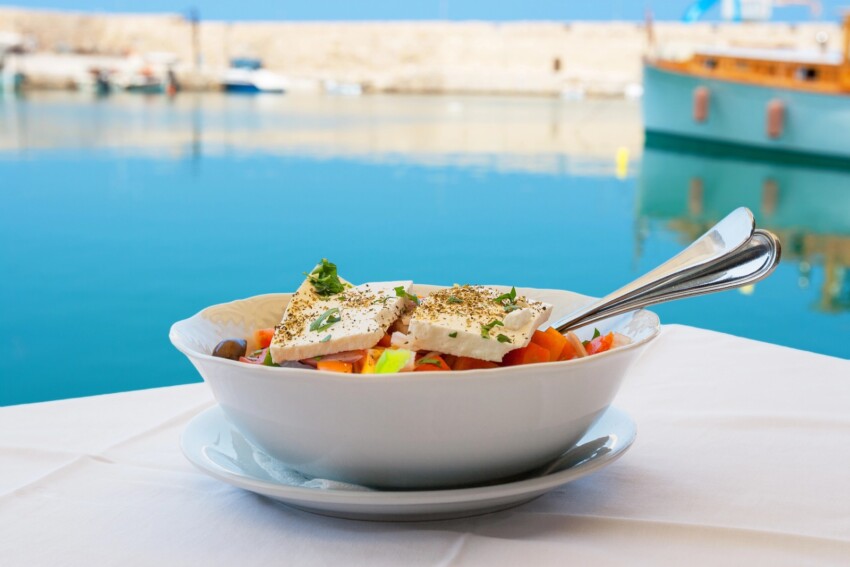
Cold preparations occupy a place of honour in Greek gastronomy, especially during the hot summer months. These fresh and nutritious dishes bring out the quality of local ingredients and the simplicity of traditional recipes.
The Greek salad, known locally as horiatiki, is more than just a side dish: it represents the essence of the Greek culinary philosophy, based on the freshness and quality of ingredients. Consisting of tomatoes, cucumbers, red onions, peppers, kalamata olives and a generous piece of feta cheese, it is simply dressed with extra virgin olive oil, oregano and sometimes a pinch of salt.
Unlike the international versions, the authentic Greek salad contains no lettuce or other leafy vegetables. The tomatoes must be ripe and tasty, the olives are necessarily kalamata (local variety of black olives) and the feta cheese is served in a single piece on top of the vegetables, not crumbled.
During the summer months, the Greek salad is a light and nutritious meal, perfect to counteract the Mediterranean heat. In traditional taverns it is served with rustic bread to catch the tasty dressing that forms at the bottom of the dish.
Melitzanosalata is a creamy mixture of roasted aubergines mixed with garlic, olive oil, lemon and sometimes yoghurt or mayonnaise. The aubergines are traditionally roasted over charcoal, giving the dish a characteristic smoky flavour that distinguishes it from similar preparations in other Mediterranean countries.
This starter, particularly popular in the northern regions of Greece, is served cold and garnished with fresh parsley, black olives or red peppers. Melitzanosalata is perfect spread on bread or enjoyed as an accompaniment to grilled meat dishes.
The heart of Greek cuisine is expressed in its main dishes, where ancient traditions and Mediterranean influences come together to create unique flavours. Here are the best-loved and most recognised preparations of Hellenic gastronomy.
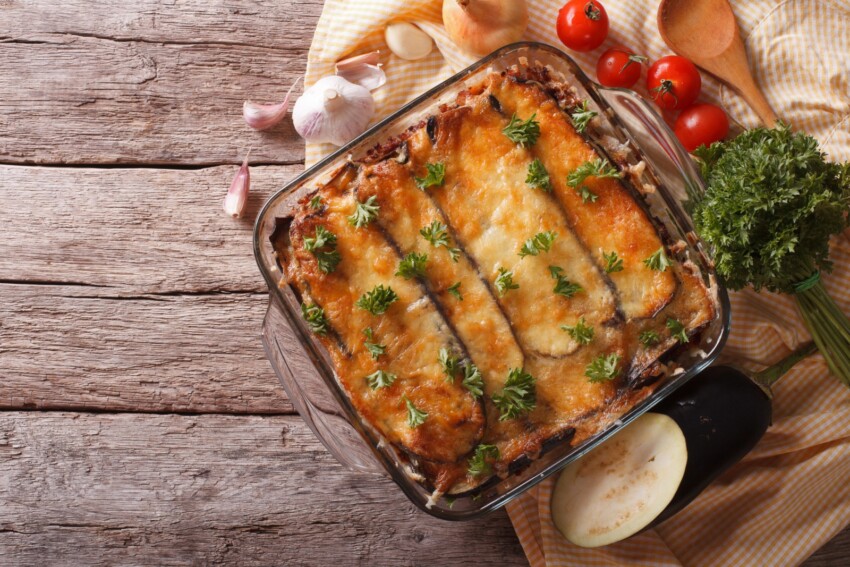
Moussaka is one of the most iconic recipes of Greek cuisine in the world. This rich dish made with aubergines, minced meat sauce and béchamel represents the meeting of Balkan culinary traditions and Middle Eastern influences.
It is traditionally prepared with alternating layers of fried aubergines, a meat sauce (usually lamb or beef) flavoured with cinnamon and spices, and a thick layer of béchamel sauce that forms a golden crust when cooked in the oven. In more elaborate versions, layers of potatoes and courgettes are also added.
Although today considered a mainstay of national gastronomy, modern moussaka was only codified in the early 20th century by the famous Greek chef Nikolaos Tselementes, who introduced béchamel (a French-derived element) to refine this dish of rural origins.
Souvlaki consists of chunks of meat (usually pork, but also chicken or lamb) marinated and cooked on a spit. This cooking method has very ancient origins, as evidenced by references in Homer’s texts and archaeological finds of grills and skewers dating back to ancient Greece.
Gyros, on the other hand, is prepared with marinated meat (mainly pork or chicken) cooked on a rotating vertical spit. The meat is then thinly sliced and served in various ways. Both preparations are commonly offered as ‘pita-souvlaki’ or ‘pita-gyros’: the meat is wrapped in pita bread together with tomatoes, onions, tzatziki and sometimes chips.
These dishes represent traditional Greek fast food and are available in every corner of the country, from taverns to street stalls called ‘souvlatzidika’. Each region boasts its own version, with differences in marinades and seasonings.
Pastitsio is a baked dish consisting of tubular pasta, meat sauce and béchamel. Often referred to as the ‘Greek lasagna’, this dish reflects Italian influences in Hellenic cuisine, while maintaining a distinctly Greek character due to the use of spices such as cinnamon and cloves in the meat sauce.
The pasta used is traditionally bucatini, arranged in an even layer and covered first by the beef or lamb ragout and then by a generous layer of béchamel sauce. When cooked in the oven, the surface browns, creating a contrast of textures with the soft, savoury interior.
Pastitsio is a typical dish for Sunday family meals and celebrations, but you will also find it on the menus of many traditional taverns and restaurants.
Yemista (meaning ‘stuffed’ in Greek) are vegetables stuffed with rice flavoured with herbs. Traditionally, tomatoes, peppers, aubergines and courgettes are used, hollowed out and stuffed with a mixture of rice, onion, garlic, parsley, mint and plenty of olive oil.
This dish, available in a vegetarian version or with the addition of minced meat in the filling, perfectly represents Greek home cooking. Yemistas are baked with potato wedges that absorb the juices of the vegetables while cooking, creating a delicious side dish.
A summer dish par excellence, yemista are easily found in family taverns during the tomato and pepper season. They are served at room temperature or lukewarm, often accompanied by fresh feta cheese and bread to collect the seasoning.
Kokoretsi is a traditional preparation of lamb offal (heart, lungs, kidneys) skewered and wrapped with lamb intestines. This dish, most popular during Easter celebrations but available all year round in specialised taverns, represents the Greek tradition of using every part of the animal.
It is cooked slowly on a spit, often alongside the whole lamb during Easter barbecues, until the outside is crispy and the inside tender and tasty. The kokoretsi is then sliced and served with lemon and spices.
Although it may be a bold choice for visitors, this dish is highly valued by Greeks for its rich flavour and cultural significance, especially during Orthodox Easter.
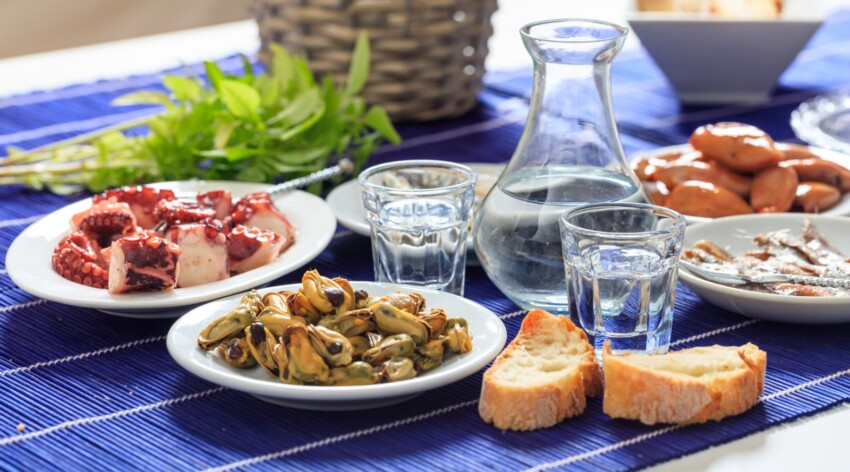
With more than 13,000 km of coastline, Greece has a fishing tradition going back thousands of years. Fish and seafood recipes are a fundamental aspect of the Greek Mediterranean diet, especially in the islands and coastal areas.
Squid is one of the most popular seafood dishes in Greece, prepared mainly in two ways: grilled or fried. The lighter grilled version involves fresh squid marinated in olive oil, lemon and oregano, then grilled until tender.
Fried squid (καλαμαράκια τηγανητά – kalamarakia tiganita), on the other hand, are floured and dipped in boiling oil until golden. In both cases, they are served with fresh lemon wedges and accompanied by salad or other vegetables.
In the fish taverns along the Greek coast, squids arrive daily from local fishermen, guaranteeing freshness and quality. The best months to enjoy them are the summer months, when fishing is most abundant.
Oktapodaki is grilled octopus, usually served as a meze or appetiser. The traditional preparation involves a long beating of the octopus against the rocks (now replaced by less picturesque but equally effective methods) to tenderize it, followed by slow grilling with olive oil, vinegar and oregano.
Along the Greek coasts, it is common to see octopus hanging to dry in the sun before cooking, a method that helps to concentrate its flavour. The octopus is served cut into pieces, seasoned with extra virgin olive oil, vinegar and oregano, often accompanied by a glass of ouzo or tsipouro.
Garides saganaki is a dish of prawns cooked in tomato sauce with feta cheese. The name comes from the small two-handled pan (sagani) in which it is traditionally prepared and served.
The prawns are sautéed with garlic and chilli, then cooked in a sauce of fresh tomatoes and white wine. Before finishing cooking, cubes of feta cheese are added, which, as they heat up, soften without melting completely, creating a contrast of textures and flavours.
This dish, relatively new in Greek culinary tradition, has become very popular in fish taverns in coastal areas and islands. It is served hot, often with bread to catch the tasty sauce.
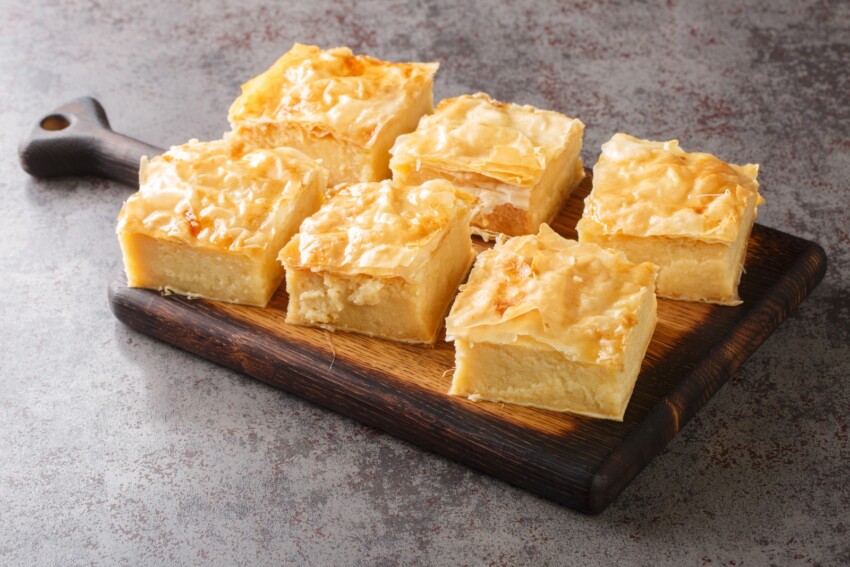
Greek desserts tell stories of cultural encounters and ancient traditions, with honey, dried fruit and phyllo dough as the protagonists. Hellenic pastries, influenced by the Ottoman tradition, are distinguished by their intense sweetness and spicy aromas.
Baklava is a pastry of Ottoman origin that is widely spread throughout Greece, made of layered sheets of phyllo dough, filled with chopped nuts and drizzled with flavoured honey syrup. The Greek version is distinguished by the predominant use of honey over sugar syrup and the addition of flavourings such as cinnamon and cloves.
Each Greek region has its own variation of baklava, which differs in the type of dried fruit used (walnuts, pistachios or almonds) and the flavourings added to the syrup. In northern Greece, for example, walnuts are more common, while on the islands, almonds are preferred.
Baklava is cut into small diamond shapes or squares before baking and served as a dessert pastry or as an accompaniment to Greek coffee. Its texture, crispy outside and soft inside, together with the sweetness of honey and the scent of spices, makes it a complete sensory experience.
Loukoumades are leavened dough pancakes dipped in honey and sprinkled with cinnamon. This sweet, whose origins date back to ancient Greece, was traditionally served as a prize to the winners of the Olympics.
The preparation involves small portions of a fluid dough made from flour, yeast and water, which are fried in boiling oil until golden brown. As soon as they are removed from the oil, the loukoumades are dipped in hot honey syrup and garnished with cinnamon, chopped nuts or even chocolate in more modern versions.
It is a very popular street cake, sold in specialised kiosks called ‘loukoumatzidika’, and is particularly popular during the winter and at traditional festivals.
Galaktoboureko is a baked cake consisting of semolina cooked in milk and wrapped in phyllo dough, then drizzled with flavoured syrup. The name is derived from the Greek words ‘gala’ (milk) and the Turkish word ‘börek’ (savoury pie), indicating the multi-ethnic influences of this dessert.
The preparation involves a thick cream of semolina, milk, eggs and vanilla, arranged between layers of filo pastry brushed with butter. After baking, the dessert is drizzled with a cold syrup flavoured with lemon or orange peel.
Galaktoboureko is served at room temperature or slightly warm, cut into rectangular portions. It is a dessert commonly found in traditional Greek bakeries (zaharoplasteia) and is often prepared at family celebrations.
Greek yoghurt is not only a basic ingredient of Hellenic cuisine, but also a dessert in its own right when served with thyme honey and walnuts. Traditional Greek yoghurt is characterised by its thick and creamy texture, the result of a prolonged fermentation process and meticulous draining of the whey.
In Greek taverns and restaurants, it is served as a dessert in earthenware bowls, covered with local honey (preferably thyme or pine, particularly aromatic in the Greek islands) and garnished with walnuts or other dried fruits.
This simple yet refined dessert perfectly represents the Greek culinary philosophy, based on a few ingredients of the highest quality. Authentic Greek yoghurt contains at least 10 per cent fat and is made from sheep’s or goat’s milk in the more traditional versions.
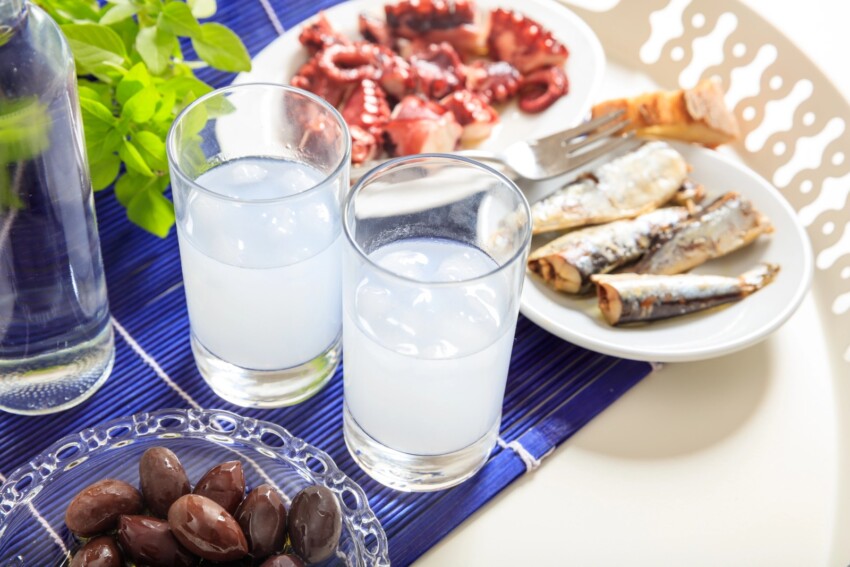
Drinks in Greece are not just accompaniments to meals, but real cultural institutions. From coffee to ouzo, each sip recounts centuries of tradition and reveals the relaxed rhythm of Hellenic daily life.
Ouzo is an aniseed-flavoured spirit, a symbol of Greek convivial culture. Produced mainly on the island of Lesvos, it is traditionally served neat or diluted with water, which transforms its appearance from clear to milky due to the essential oils of the aniseed.
Drinking ouzo in Greece is a real social ritual: it is served in open-air cafés (ouzerie) accompanied by small plates of mezedes to be shared in company. Tasting takes place slowly, following the relaxed rhythm of conversation.
Ouzo was granted protected designation of origin by the European Union in 2006, recognising the uniqueness of the Greek product compared to other aniseed-flavoured spirits from the Mediterranean.
Retsina is a white wine flavoured with pine resin, the origin of which dates back to ancient Greece, when resin was used to seal earthenware amphorae. Today, the resin is deliberately added during fermentation, giving the wine a characteristic balsamic flavour.
Produced mainly in the Attica region, modern retsina is mainly made from grapes of the Savatiano or Rhoditis variety. Its distinctive flavour, initially surprising to the uninitiated, goes well with Greek dishes, especially those based on fish and seafood.
In traditional taverns, retsina is served in small carafes or plain glasses, often slightly chilled but not iced, to fully appreciate its complex aromas.
Greek coffee is a drink prepared by boiling finely ground coffee in a small copper pot called a briki. It is served in cups, with the coffee grounds settling at the bottom.
It is ordered by specifying the desired amount of sugar: ‘sketos’ (no sugar), ‘metrios’ (medium sweet) or ‘glykos’ (very sweet). The ritual of drinking Greek coffee is a moment of pause and socialisation, so much so that in the past people used to read the future in the coffee grounds left in the cup.
This tradition, which arrived in Greece during the Ottoman period, has become an integral part of the local culture. In traditional coffee houses (kafenia), Greek coffee is prepared slowly and served with a glass of fresh water.
Frappe is a frothy iced coffee invented by chance during the Thessaloniki International Fair in 1957. Prepared with instant coffee, water, sugar and ice, it is shaken vigorously until it forms a thick, persistent foam.
During the summer months, frappe is ubiquitous in Greece, from posh coffee shops to beach kiosks. Greeks sip it slowly, often for hours, turning it into an excuse for long outdoor conversations.
There are different variations: with milk (‘me gala’), without milk (‘sketo’), with lots of sugar (‘glyko’) or little sugar (‘metrio’). The modern version involves the use of shakers or electric blenders, but purists still prefer the traditional method with a hand shaker.

The gastronomic experience in Greece is deeply linked to the places where food is consumed. From traditional tavernas to modern restaurants, each type of establishment offers a different but authentic interpretation of the national cuisine.
Taverns are the beating heart of authentic Greek gastronomy. These family-run restaurants, often run by the same family for generations, offer an informal atmosphere and a menu that changes according to the seasonal availability of ingredients.
In coastal tavernas, specialising in fish and seafood, it is customary for customers to go directly to the kitchen to choose the catch of the day. In rural areas, on the other hand, taverns mainly serve local meat and vegetable dishes.
A typical experience in a Greek taverna includes sharing several mezedes (starters) accompanied by local wine or ouzo, followed by a main course and often ending with fresh fruit offered by the house as a gesture of hospitality (philoxenia).
Ouzerias are establishments specialising in serving ouzo accompanied by a variety of mezedes. Unlike taverns, they do not generally offer main dishes, but a sequence of small portions designed to accompany the drink.
These establishments are a social institution in Greece, places where people meet to converse, discuss politics or simply watch life go by, all while following the slow pace dictated by the tasting of ouzo.
The best ouzerias can be found on the island of Lesvos (home of ouzo), in Thessaloniki and in the more traditional neighbourhoods of Athens such as Plaka and Psiri.
Psistarias are restaurants specialising in grilled meats. In these establishments, often recognisable by the rotating gyros skewers visible from outside, you can enjoy the widest variety of meats prepared according to traditional methods.
The typical menu includes souvlaki, gyros, kokoretsi, bifteki (spicy meatballs) and paidakia (lamb chops), all accompanied by fried potatoes, salad and tzatziki. In the more traditional psistarias, meat is cooked on open charcoal grills, adding a theatrical element to the dining experience.
These restaurants are particularly popular with Greek families at weekends and are a great option for those who want to sample meat specialities at generally low prices.
Estiatorios are more formal restaurants than tavernas, with more structured menus and table service. These establishments offer traditional Greek dishes in more elaborate versions or reinterpreted with a contemporary twist.
In tourist centres and major cities, estiatorios often offer multilingual menus and English-speaking staff, making them a convenient choice for visitors who want a Greek gastronomic experience in a more sophisticated setting.
In recent years, a new generation of Greek chefs has created restaurants that combine modern techniques with traditional ingredients and recipes, elevating Greek cuisine to new levels of sophistication while maintaining its cultural identity.
Fully experiencing Greek cuisine means understanding its rhythms, customs and traditions. Here are a few tips to turn your trip to Greece into an authentic culinary adventure, far from the more touristy routes.
The best way to discover authentic Greek cuisine is to observe where Greeks eat. Restaurants full of local residents are generally a good sign of quality and authenticity. Get away from the more touristy areas and look for taverns frequented by Greek families, especially on Sundays at lunchtime, when the most important meal of the week is traditionally eaten.
In the islands and coastal resorts, look for tavernas run by fishermen, where the fish arrives fresh every day and is cooked according to local recipes handed down from generation to generation.
In Greece, meals follow different timetables than in other European countries. Lunch is generally served between 14:00 and 16:00, while dinner rarely starts before 21:00, especially in summer.
Adapting to these times will allow you not only to avoid empty restaurants (a bad sign in Greece!) but also to experience gastronomy as an integral part of the local culture, where food is inextricably linked to sociability and sharing.
Greece, despite its relatively small size, boasts an extraordinary regional gastronomic diversity. Each island, mountain or coastal region has its own specialities, influenced by geography, climate and local history.
In Crete, try dakos (dried barley bread softened with tomato and mizithra cheese), in the Cyclades, don’t miss Santorini fava (mashed yellow pulses), in Thessaly, enjoy spetzofai (sausage with peppers), and in the Peloponnese, try magiritsa (lamb entrails soup).
The panigiri (patron saint’s festivals) are a unique opportunity to discover gastronomic specialities that you are unlikely to find in restaurants. During these celebrations, which mainly take place in summer in small rural and island communities, traditional dishes are prepared in large quantities, often cooked in huge open-air pots.
Particularly famous are the panigiri of the islands of Ikaria, Tinos, Lesvos and Crete, where you can taste preparations such as kokoretsi, lamb cooked underground according to ancient traditions, or ceremonial sweets prepared only on specific occasions.
Greek cuisine, with its peculiarities and traditions, can raise many questions in travellers’ minds. We have collected and answered the most common questions to help you better navigate the rich Greek gastronomic landscape.
Greek cuisine offers numerous options for vegetarians. Among the most popular dishes are:
Many of the traditional mezedes are naturally vegetarian, making Greece a favourable destination for those on this diet.
Many traditional Greek dishes are naturally gluten-free, such as moussaka (asking for confirmation that the béchamel is prepared without flour), Greek salad, grilled meat and fish dishes, and most vegetable and cheese mezedes.
However, it is important to pay attention to the bread served on the table and the desserts, which almost always contain gluten. In general, in popular tourist locations, many restaurants are now aware of special dietary requirements and can offer gluten-free alternatives.
Greece has a wine tradition dating back thousands of years with indigenous grape varieties producing unique wines. Some recommended pairings
In traditional taverns, you can always ask for ‘krasi varel’ (house wine), usually served in jugs and produced locally.
Authentic Greek yoghurt is much thicker and creamier than ordinary yoghurt due to the whey draining process. In Greece, it is eaten in various ways:
For an authentic experience, look for yoghurt made from sheep’s or goat’s milk, which is significantly richer and tastier than cow’s milk.
In Greece, meals are moments of conviviality and sharing. Some etiquette rules to keep in mind
Remember that Greeks tend to dine late and extend meals, so there is no rush to clear the table once you have finished eating.
Toasting in Greece is done by saying ‘Yamas!‘ (meaning ‘to our health!’) while maintaining eye contact with other diners. It is considered important to look into the eyes of the person you are toasting with, otherwise, according to local superstition, you risk seven years of bad romantic luck.
With alcoholic drinks such as ouzo, tsipouro or raki, it is traditional to make an initial collective toast before drinking, often accompanied by the wish ‘Stin ygeia mas!’ (to our health).
Meal times in Greece are much later than in many European countries:
Many Greeks also have an afternoon snack (apogeumatino) around 18:00-19:00 to bridge the long gap between lunch and dinner.
In Greek restaurants, service is generally included in the bill, but it is customary to leave a small tip as a gesture of appreciation. The common practice is to round up the bill or leave a few coins in cafés and bars, while in taverns and restaurants you can leave around 5-10% of the total amount.
In more touristy locations, tipping is more expected than in areas less frequented by foreign visitors. In any case, it is never compulsory but always appreciated.
Although there is no officially designated national dish, moussaka is often considered the gastronomic symbol of Greece internationally. However, Greeks might point to different dishes as representative of their national cuisine, including:
Greek cuisine is too varied and regional to be represented by a single dish, reflecting the cultural and historical richness of the country.

 Hotel
Hotel  Budget accommodations
  Apartments
  Family Hotel
  Luxury Hotel
  Resorts