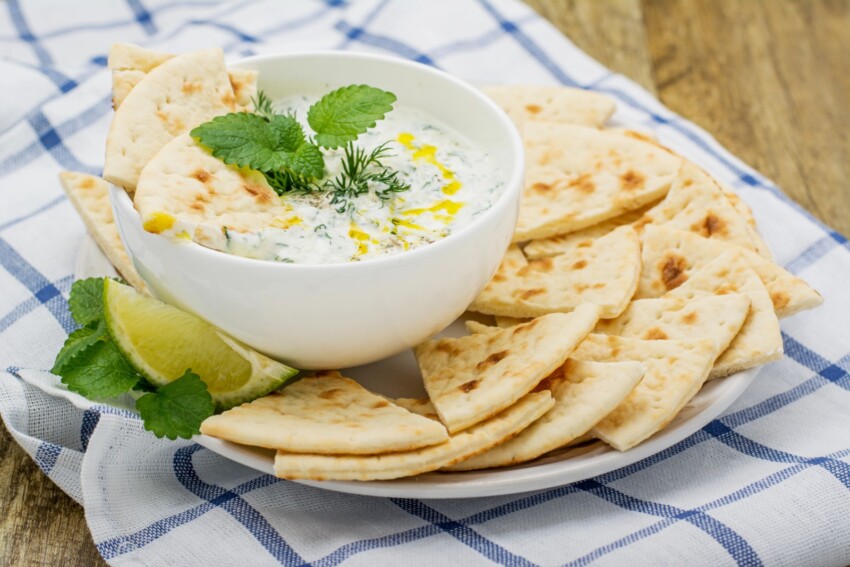
Tzatziki is much more than a simple accompaniment in Greek cuisine: it represents the essence of the Mediterranean culinary tradition, combining simple ingredients in a harmony of flavours that conquers every palate. This creamy sauce made of yoghurt, cucumber, garlic and olive oil is ubiquitous in Greek taverns, served with virtually every dish.
When you taste tzatziki in a traditional taverna, you will immediately notice the difference from the commercial versions or imitations you find elsewhere. Real Greek tzatziki is thick, fresh and perfectly balanced: the yoghurt should be thick like whipped cream, the cucumbers crunchy and well-drained, the garlic perceptible but not aggressive.
The origins of tzatziki go back to Ottoman and Byzantine culinary traditions. The name itself derives from the Turkish ‘cacık’, a similar sauce popular throughout Anatolia. However, the Greek version is distinguished by its thicker and creamier consistency, achieved through the use of traditional Greek yoghurt, which is much more compact than Turkish yoghurt.
Already in ancient Greece, similar preparations existed: yoghurt was produced in mountainous regions and combined with herbs and garlic. Shepherds used to take this food with them during long transhumance periods, appreciating its nutritional properties and ability to keep even without refrigeration.
Modern tzatziki, as we know it today, developed during the 19th and 20th centuries, when Greek cuisine began to define its own identity distinct from the Ottoman one. The generous addition of extra virgin olive oil and the use of fresh local cucumbers characterised the Greek recipe compared to the variants from neighbouring countries. Today, tzatziki has become one of the most recognisable culinary symbols of Greece throughout the world.
The quality of tzatziki depends entirely on the selection of ingredients. Traditional Greek yoghurt, called ‘straggisto’, is drained for hours until it loses most of its whey, resulting in a thick and creamy texture. This process gives tzatziki the characteristic texture that distinguishes it from more liquid sauces.
The cucumbers must be fresh and crisp, preferably Greek varieties with thin skins and small seeds. The preparation of the cucumbers is crucial: they should be roughly grated, salted and left to drain in a colander to remove excess water. This step ensures that the tzatziki retains its thick consistency without becoming watery.
Garlic is the most controversial ingredient in tzatziki. The amount varies enormously according to personal and regional preferences: on the Greek islands, they tend to use less, while in the mountainous regions of the north, tzatziki can be decidedly more pungent. Garlic should be finely minced or crushed with a garlic press and left to macerate briefly in olive oil to soften its intensity.
Many Greek chefs recommend adding garlic to tzatziki at least an hour before serving, allowing the flavours to meld. Some remove the central green core of the garlic cloves to make them more digestible and less lingering.
Greek extra virgin olive oil is essential to the success of tzatziki. It must be of excellent quality, fruity but not too spicy. Some traditional recipes call for up to 100 ml of oil per half litre of yoghurt, creating a particularly rich and tasty sauce.
The herbs vary according to local traditions: fresh dill is the most common addition, but in some regions fresh chopped mint is used. White wine vinegar or lemon juice add the necessary acidity to balance the creaminess of the yoghurt.
Travelling through Greece, you will discover that each region has its own interpretation of tzatziki. In Crete, for instance, many cooks add chopped walnuts, which give it a fuller texture and a slightly richer flavour. This variant, called ‘skordalia style tzatziki’, combines elements of two traditional sauces.
In the Cyclades islands, particularly in Santorini and Mykonos, it is common to find tzatziki prepared with goat yoghurt, which has a tangier flavour and a slightly different texture. This version pairs perfectly with local dairy products and reflects the pastoral tradition of the islands.
In Greek Macedonia and Thessaloniki, tzatziki tends to be thicker and richer in garlic than the island versions. Many taverns in the old town also add a sprinkling of sweet paprika or chilli flakes on top, creating a pleasant colour contrast and a touch of spiciness.
It is also common in this region to add small cubes of cucumber instead of grating it, creating a more rustic and crunchy tzatziki. This version is often served as a stand-alone appetiser rather than a simple accompaniment. Even in the Ionian islands, such as Corfu and Kefalonia, tzatziki retains distinctive characteristics linked to local traditions.
In modern taverns and Greek gourmet restaurants, chefs are experimenting with creative variants of tzatziki. Some versions incorporate grated beetroot to create a shocking pink tzatziki, others add avocado for an even creamier texture.
During the summer, when markets overflow with fresh vegetables, some chefs prepare tzatziki with grated courgettes instead of cucumbers, creating a more delicate version suitable for palates that find cucumbers too watery. These modern interpretations demonstrate the versatility of the basic recipe while maintaining the Greek identity of the dish.
Tzatziki is served almost everywhere in Greece, but that doesn’t mean it’s all equally good. The best preparations are found in family-run tavernas, where the yoghurt is often home-made or bought from small local producers.
In Athens, the districts of Plaka and Psyrri hide tavernas where tzatziki is prepared fresh every morning. To discover the best places to eat in Athens, get away from the more touristy areas. Avoid the restaurants along the main touristy streets: the tzatziki served in these places is often prepared with commercial yoghurt and pre-cooked cucumbers, making it watery and bland.
An excellent tzatziki should be cold but not icy, thick enough to hold on an upright spoon without dripping. The surface should be drizzled with olive oil and garnished with fresh dill or paprika. The cucumbers should be visible but perfectly integrated into the sauce, not floating in a watery liquid.
When ordering tzatziki, observe how it is served: in traditional taverns it comes in an earthenware or ceramic bowl, never in plastic containers. If you notice excess liquid at the bottom of the bowl, it is a sign that the cucumbers have not been drained properly.
Greeks eat tzatziki in various ways. It is served as a meze (starter) with warm pita bread, spread on souvlaki and gyros, or as an accompaniment to grilled meats and fried fish. In traditional taverns, tzatziki is part of the ‘piato tis oras’, the dish of the day, and accompanies virtually every order.
During the summer months, many Greeks consume tzatziki as a main dish, accompanying it with fresh tomatoes, olives and bread, appreciating its refreshing and nutritious properties. It is considered a ‘cold’ food according to traditional Greek medicine, perfect to counteract the summer heat. After a day spent exploring the sights of Greece, tzatziki is a fresh and light way to regain energy.
The versatility of tzatziki makes it suitable for countless pairings. It goes perfectly with grilled meats, particularly lamb and chicken, where the freshness of the yoghurt balances the intense flavours of the meat. With fish, tzatziki goes well with fried and simple grilled preparations.
In the Greek islands, tzatziki is often served with fried courgettes (kolokithokeftedes) or grilled aubergines, creating a perfect contrast between the warmth of the vegetables and the freshness of the sauce. Many Greeks also use it as a salad dressing, replacing the classic oil and lemon. After a day at the Greek beaches, tzatziki is the perfect way to cool down.
Tzatziki is not only delicious but also extremely healthy. Greek yoghurt is rich in protein and probiotics beneficial for digestion. Cucumbers provide hydration and vitamins, while garlic has antibacterial properties and cardiovascular benefits.
Extra virgin olive oil contributes healthy monounsaturated fats and antioxidants. One serving of tzatziki contains about 80-100 calories, making it a light option compared to other creamy sauces. During the summer months, Greeks consider it a ‘medicinal’ food that helps maintain hydration and aids digestion.
Although Greek tzatziki is the most famous, there are similar sauces throughout the Eastern Mediterranean and Middle East. Turkish cacık is more liquid, is often served as a refreshing drink and contains less garlic. In some regions of Turkey, dried mint is added instead of dill.
Bulgarian tarator is similar to tzatziki but includes chopped nuts and sometimes soaked bread, making it more substantial. Some versions also add pickled cucumbers instead of fresh ones, creating a more acidic and complex flavour.
In Cyprus, tzatziki is made with sheep’s yoghurt, which has a more intense flavour and a slightly grainy texture. Cypriots often add plenty of fresh mint and serve the sauce slightly more liquid than the mainland Greek version.
Making authentic tzatziki at home is surprisingly simple, but requires attention to detail and quality ingredients. This recipe makes about 4-6 servings as an accompaniment or starter.
500 g whole Greek yoghurt (minimum 10% fat), 2 medium fresh cucumbers, 3-4 cloves of garlic, 80 ml extra virgin olive oil, 2 tablespoons white wine vinegar or juice of 1 lemon, 2 tablespoons chopped fresh dill (or 1 tablespoon fresh mint), sea salt, freshly ground white pepper
Wash the cucumbers thoroughly and decide whether to peel them completely or only partially: some traditional recipes keep part of the peel for colour and nutrients. If the cucumbers have very large seeds, cut them in half lengthwise and remove the seeds with a teaspoon.
Grate the cucumbers using a large-hole grater. Transfer the grated cucumbers to a colander, sprinkle generously with a tablespoon of sea salt and mix well. Place the colander over a bowl and leave to drain for at least 30-45 minutes, pressing occasionally with a spoon to extract as much liquid as possible.
After the draining time, take the cucumbers by handfuls and squeeze them vigorously with your hands to remove any remaining liquid. This step is crucial: if the cucumbers are too wet, the tzatziki will be watery and unappetising. Well squeezed cucumbers should be almost dry to the touch.
Peel the garlic cloves and, if you prefer a milder flavour, remove the central green shoot by cutting the cloves in half lengthways. Finely mince the garlic with a sharp knife or crush it with a garlic press.
In a small bowl, mix the minced garlic with 2 tablespoons of extra virgin olive oil and a pinch of salt. Let it macerate for 10-15 minutes: this process softens the pungent taste of the garlic and makes it more digestible. If you prepare the tzatziki well in advance, you can skip this step and add the garlic directly into the yoghurt.
Pour the Greek yoghurt into a large bowl. Make sure the yoghurt is well chilled but not frozen. If the yoghurt has released whey on the surface, pour it off or incorporate it while stirring: too liquid yoghurt is not ideal for tzatziki.
Add the well-drained and squeezed cucumbers to the yoghurt. Add the garlic macerated in oil, the white wine vinegar (or lemon juice), and the finely chopped fresh dill. Mix all the ingredients with a wooden spoon or spatula, incorporating well but without overworking the yoghurt to maintain its creamy consistency.
Pour in the remaining extra virgin olive oil, continuing to stir gently. The oil should be well incorporated but it is normal for a slight sheen to remain on the surface. Adjust the salt and add freshly ground white pepper to taste: white pepper is preferred to black because it does not alter the white colour of the tzatziki.
Cover the bowl with cling film and place in the fridge for at least 2-3 hours, ideally overnight. This resting time is crucial: it allows the flavours to fully meld and the tzatziki to thicken further. While resting, the yoghurt absorbs the flavours of the garlic and herbs, creating a harmonious taste.
Before serving, remove the tzatziki from the refrigerator and leave it at room temperature for 10-15 minutes: served too cold, the flavours are muted. Mix gently, transfer to a serving bowl and level the surface with the back of a spoon.
Decorate with a drizzle of extra virgin olive oil on the surface, a sprinkling of sweet paprika or chilli flakes, and sprigs of fresh dill. Serve immediately with warm pita bread, raw vegetables for dipping, or as an accompaniment to grilled meats.
Tzatziki will keep in the fridge for 3-4 days in an airtight container. After the first day, it may release some liquid: before serving, pour it off and stir well. The garlic flavour will tend to intensify as the days go by.
Do not freeze the tzatziki: the yoghurt separates during thawing and the consistency is grainy and unpleasant. If you prepare excessive quantities, consider freezing the already grated and drained cucumbers separately and adding them to the fresh yoghurt when needed.
For a lighter version, you can use Greek yoghurt with a lower fat content, but the result will be less creamy. If you can’t find authentic Greek yoghurt, you can make it yourself by draining plain yoghurt in a gauze for 4-6 hours in the fridge.
In the absence of fresh dill, you can use fresh parsley or, alternatively, a tablespoon of chopped fresh mint. Avoid dried herbs: they do not impart the same fresh flavour and can alter the consistency. For a creamier tzatziki, add 2 tablespoons of sour cream or cream cheese spread.
If you prefer a less liquid tzatziki overall, add a tablespoon of fine breadcrumbs that will absorb any excess moisture. This trick is used in some Greek taverns to ensure a perfect consistency even with particularly watery cucumbers.
 Hotel
Hotel  Budget accommodations
  Apartments
  Family Hotel
  Luxury Hotel
  Resorts