Greece represents one of the richest destinations in the world for cultural and historical heritage, with no less than 20 sites inscribed on the prestigious UNESCO World Heritage List. From the ratification of the Convention on 17 July 1981 until the last inscription in July 2025, the Hellenic country has seen the exceptional universal value of places ranging from classical antiquity to the Byzantine era, from architectural wonders to unique cultural landscapes recognised.
These UNESCO sites in Greece bear witness to millennia of history, art and spirituality that have profoundly influenced western civilisation. From the Acropolis of Athens to the Meteors, from Mount Athos to the island of Delos, each site recounts a fundamental page of human history and is an essential step in understanding the roots of our culture.
The latest award, obtained in July 2025, concerns the Minoan Palace Centres of Crete, bringing the total number of Greek sites to 20, confirming Greece as one of the countries with the highest concentration of World Heritage Sites in the world. These extraordinary sites are not only vestiges of the past, but represent a living heritage that continues to inspire and fascinate millions of visitors each year.
The variety of Greek sites on the UNESCO World Heritage List reflects the richness and complexity of Hellenic history: 18 cultural sites and 2 mixed sites (Meteors and Mount Athos) combine cultural and natural value, offering visitors a journey through three thousand years of civilisation. Here they are in order of date of entry.
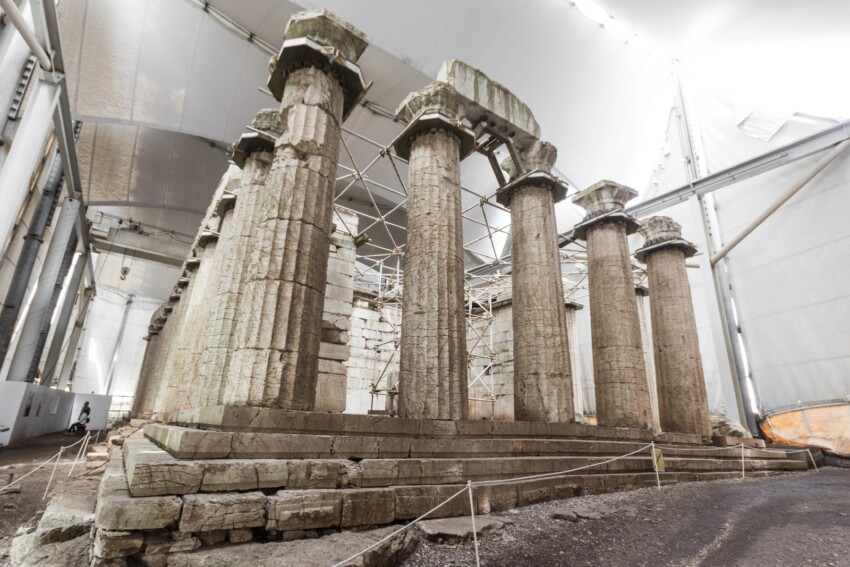
The Temple of Apollo Epicurius is located in an isolated position near the town of Bassae, in the Peloponnese, 1,131 metres above sea level. This large and imposing temple was built between 450 and 425 BC by Ictinus, the architect of the Parthenon.
The temple is dedicated to Apollo Epicurius (Apollo the Helper), god of the sun and health, who saved the city from the plague in the 5th century BC. Its architecture combines elements of the Doric, Ionic and Corinthian styles, representing a unique example of architectural synthesis. The temple, made of grey limestone with marble decoration, is oriented along the north-south axis instead of the canonical east-west.
The famous frieze, thirty-one metres long and consisting of 23 marble slabs, depicted battles between Greeks and Amazons and between Lapiths and Centaurs. Unfortunately, many of these works were removed in 1815 by the British archaeologist Charles Robert Cockerell and are now in the British Museum in London.
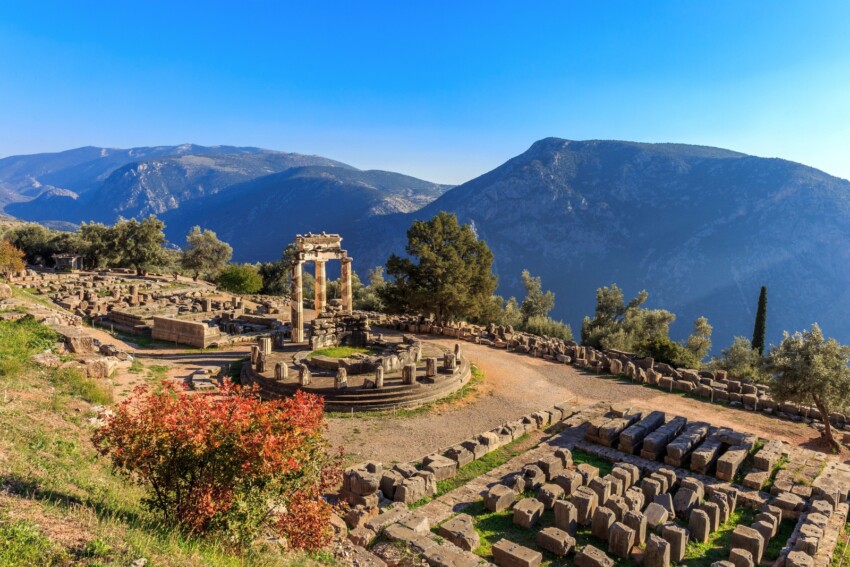
The archaeological site of the Panhellenic sanctuary of Delphi lies on the slopes of Mount Parnassus in central Greece and in ancient times was considered the centre of the Greek world, home to the most important and revered oracle of the god Apollo.
Delphi in the 6th century BC was the religious centre and symbol of the unity of the ancient Greek world. The Temple of Apollo dates back to the 4th century BC and was erected on the remains of an earlier temple from the 6th century BC. The Treasury of the Athenians is a small building in Doric order, rich in relief decoration, built in the 6th century BC to house the Athenians’ offerings to Apollo.
The complex also includes the famous Theatre and the Stadium of the Pythian Games, where sports and cultural competitions were held in honour of Apollo. The visible ruins of the Theatre date back to the Roman imperial period, while the Stadium was erected in the 5th century BC and renovated during the Roman period.
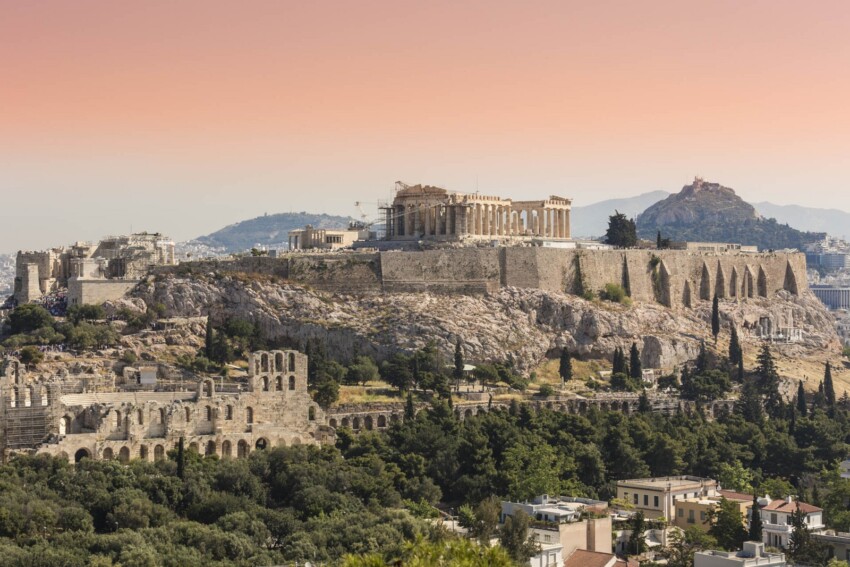
The Acropolis of Athens, dedicated to the goddess Athena, is the most important monument in Greece and an undisputed symbol of the greatness of ancient Greek civilisation. The architectural complex was built atop a sacred hill, 70 metres above the city of Athens.
The complex includes the Parthenon, the Erechtheion, the Temple of Athena Nike and the Propylaea, all built in the 5th century B.C. under the rule of statesman Pericles according to the design of sculptor Phidias. The flat top of the sacred rock, 150 metres wide and 300 metres long, also housed public buildings where the main activities of Athenian society took place.
In 2009, the new Acropolis Museum, designed by Bernard Tschumi, was opened to the public. It houses numerous sculptures and artefacts from the archaeological site. The Acropolis and Parthenon can be seen from most of the city of Athens, forming the most recognisable symbol of the Greek capital.
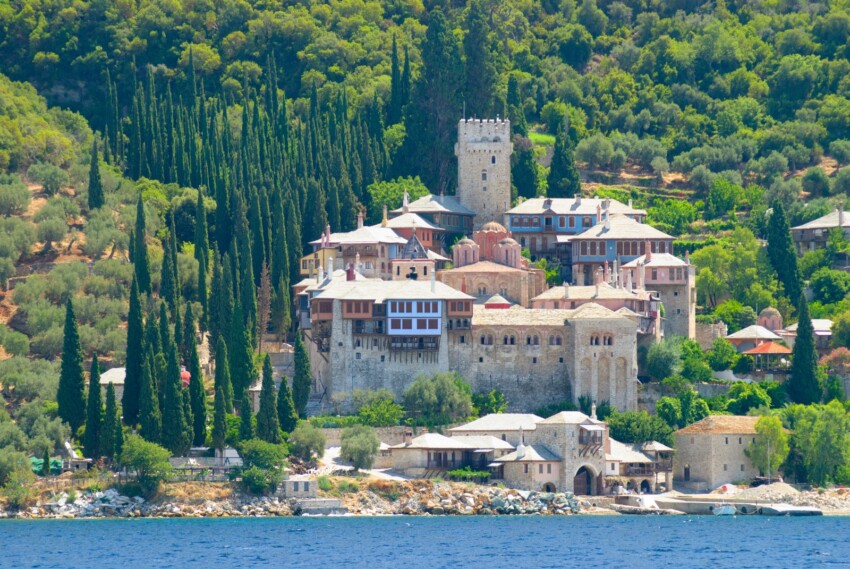
Mount Athos is an Orthodox spiritual centre that occupies the easternmost peninsula of the Chalkidiki region and is inhabited by about 1,500 monks. Entrance to the area, which includes 20 monasteries of varying architectural design and great importance, is subject to special restrictions by the monks who consider it to be holy ground.
Mount Athos contains numerous artistic treasures: ancient manuscripts, icons and frescoes painted by the most illustrious representatives of Byzantine painting, such as Theophanes the Greek and Manuel Panselinos. The holy mountain is off-limits to women and children, maintaining a thousand-year-old tradition of exclusively male monastic life.
The monasteries of Mount Athos represent one of the most important concentrations of Byzantine art in the world, with buildings dating from the 10th century to modern times. Every year, thousands of Orthodox pilgrims come to this sacred place to participate in the spiritual life of the monastic community.
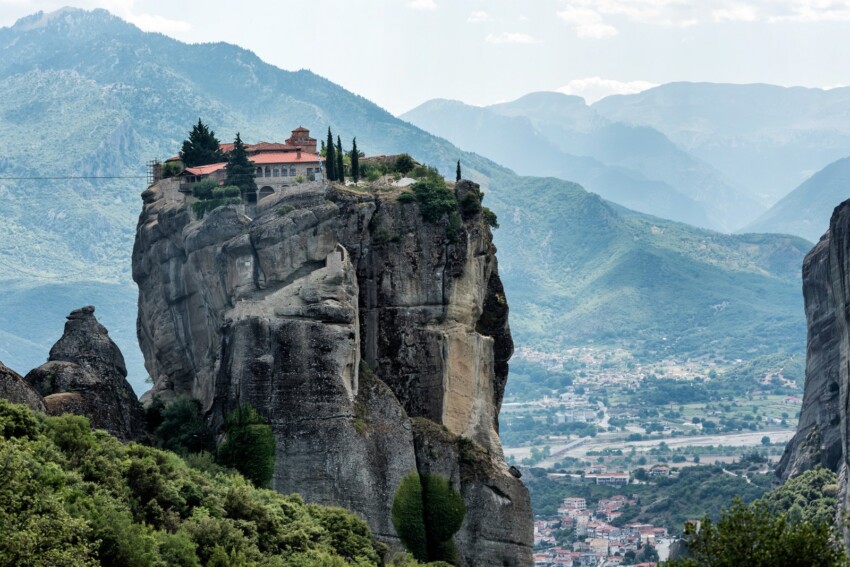
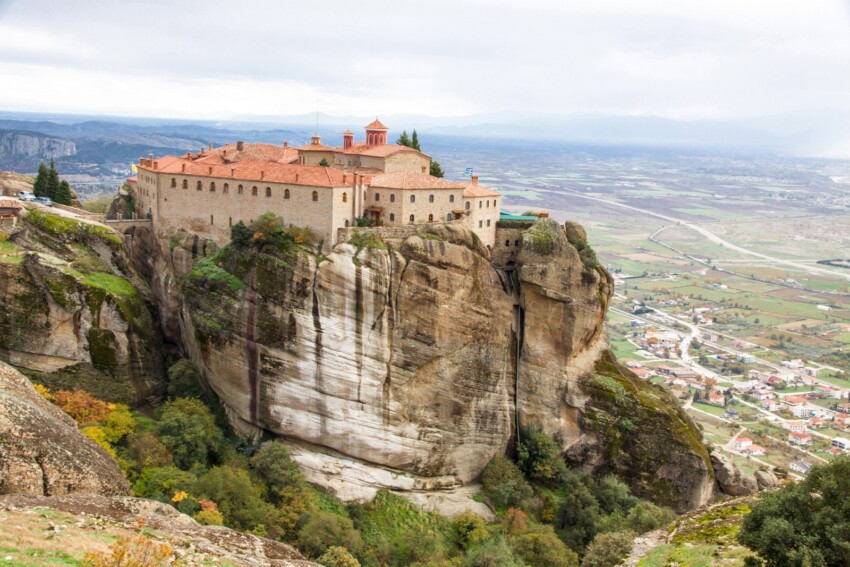
The Meteors are located in the northern part of Greece, on the north-western edge of the Thessaly plain, and are an important centre of the Orthodox Church, the second largest monastic and pilgrimage area in Greece after Mount Athos.
The extraordinary beauty of this place is due to the presence of numerous monasteries built on natural rock towers, 400 metres above the ground. This stone forest perfectly combines natural landscape and religious architecture, creating a scene of incomparable beauty.
The first monks took refuge on these heights in the 11th century and several monasteries have been built since then. Of the original 20 structures, only six active monasteries survive today: Great Meteoro, Varlaam, St. Stephen, Holy Trinity, St. Nicholas Anapausas and Russanou. These monasteries preserve important frescoes, icons and manuscripts that testify to centuries of monastic and artistic life.
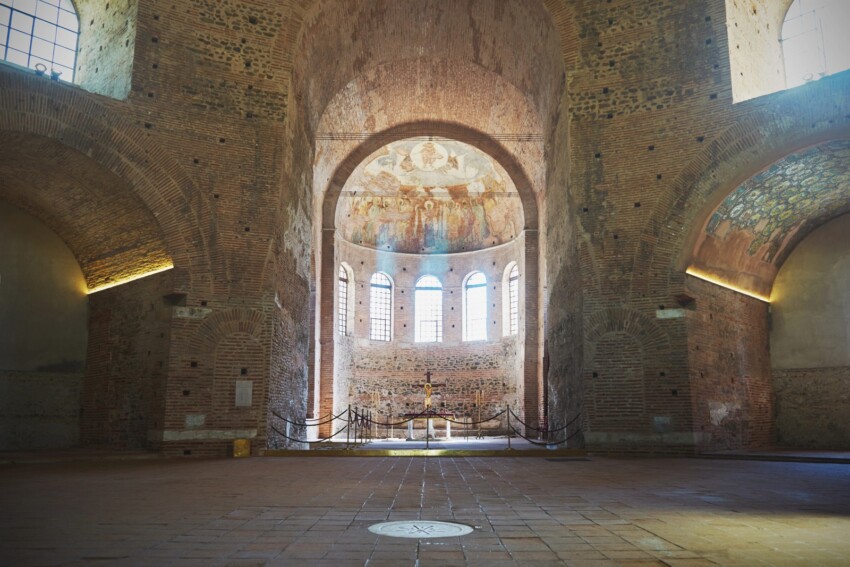
Thessaloniki is the second largest city in Greece and boasts the presence of important and magnificent Byzantine churches such as those of Acheiropoietos, Agios Dimitrios and the monastery of Latomou.
Founded in 315 BC by Cassander, who named it after his wife Thessalonik, the city of Thessaloniki was a cosmopolitan port and one of the first bases for the spread of Christianity. This crucial role is reflected in its important churches and monuments, which represent some of the best examples of early Christian and Byzantine art in the world.
The UNESCO site comprises 15 monuments ranging from the 4th to the 15th century, including early Christian basilicas, domed Byzantine churches and monastic structures. Among the most significant monuments are the Rotunda of Galerius (today’s Church of Agios Georgios), the Basilica of Agios Dimitrios with its extraordinary mosaics, and the Church of the Holy Sophia with its iconoclastic architecture.
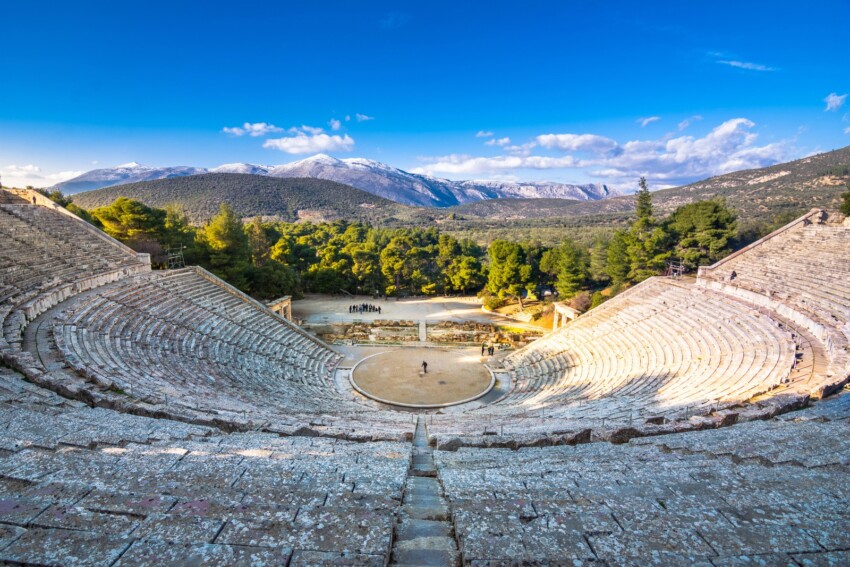
Epidaurus, in Greek Επίδαυρος, is a small town in the Argolid, in the bay of Metana in the Peloponnese, famous for its sanctuary dedicated to Asclepius, the god of healings, which had great fame from the 4th century BC.
The site is particularly famous for its theatre, the work of Polyclitus the Younger, built in the 3rd century BC with a large cavea and circular orchestra. The theatre is considered one of the best examples of ancient Greek theatre architecture and is still used today for performances and events during the Epidaurus Festival.
In the sacred precincts, bordered by walls and porticoes with monumental propylaea, stood the Doric-style temple of the god Asclepius, the Tholos (circular building) and other buildings related to healing practices. Patients came here from all over the Mediterranean to seek healing through dreams inspired by the god, giving rise to the first form of psychosomatic medicine in history.
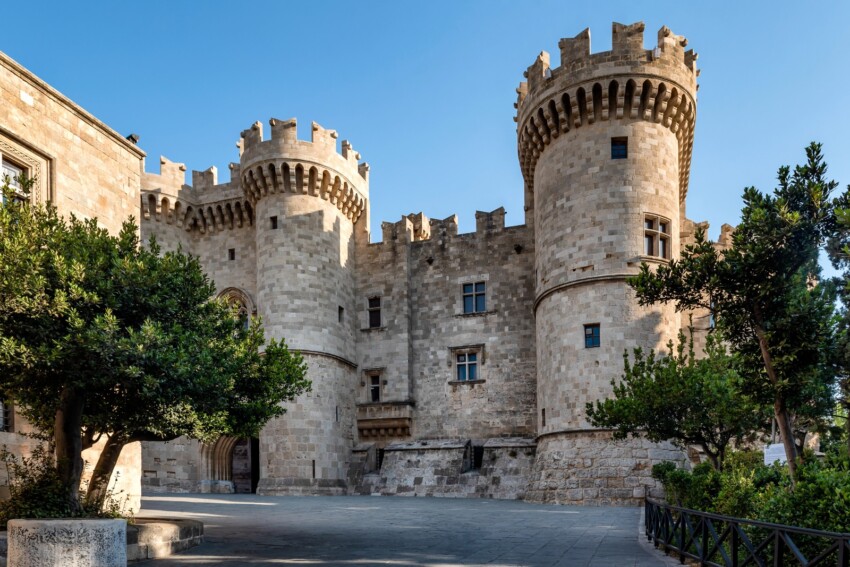
The medieval city of Rhodes, protected by the 4-kilometre-long walls built by the Knights of St. John during their occupation between 1309 and 1523, is considered a masterpiece of medieval military architecture.
The city contains the Collacchio quarter, the Grand Master’s Palace, the Knights’ Hospital (now the Archaeological Museum), and the famous Via dei Cavalieri, one of the best-preserved medieval streets in Europe. Rhodes is divided between the Upper Town in the north, where the Knights resided, and the Lower Town in the south-west, inhabited by the local population.
The architecture of the medieval city is a unique example of a fusion of Western Gothic, Byzantine and Islamic elements, the result of the different dominations that have succeeded one another on the island. The defensive walls, considered among the most impressive in the medieval world, show the evolution of fortification techniques from Byzantine to Ottoman times.
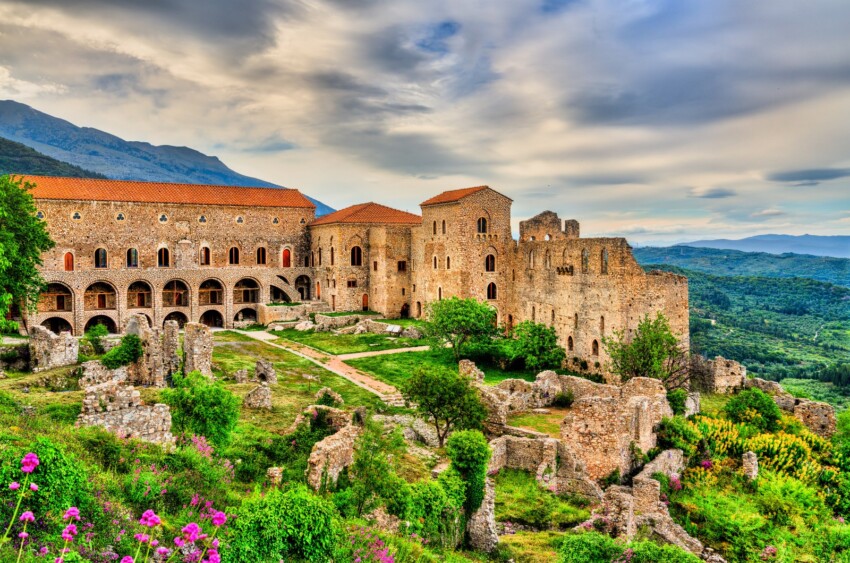
Mystras is a fortified city in the southern Peloponnese, 6 kilometres from Sparta, built amphitheatrically around a fortress built in 1249 on the slopes of Mount Taigeto.
The city was abandoned in 1832 when modern Sparta was founded by King Otto, leaving intact the extraordinary medieval ruins set in a landscape of incomparable beauty. Mystras represents one of the best-preserved examples of a Byzantine city and bears witness to the cultural revival of the late Byzantine period.
Over the centuries, the city has been subjected to Byzantine, Turkish and Venetian influences, creating a unique architectural heritage. The palaces of despots, churches with extraordinary frescoes such as Peribleptos and Pantanassa, and noble houses testify to the wealth and sophistication of this last bastion of the Byzantine Empire in Greece.
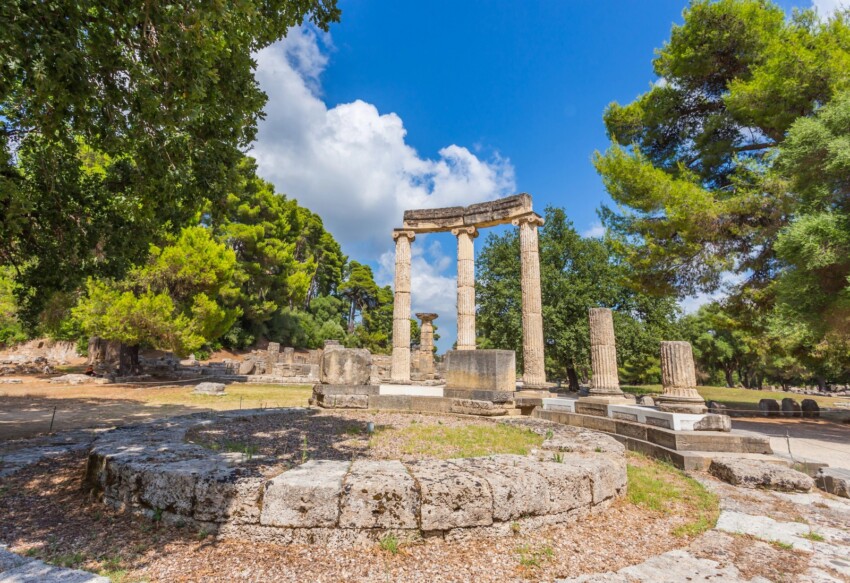
Olympia is the ancient city in the Peloponnese that was the site of the Olympic Games, held every four years since 776 BC, and a major place of worship dedicated to Zeus. Also called the Valley of the Gods, Olympia already became the centre of Zeus worship in the 10th century BC.
The most famous temple in Olympia is the one erected in honour of Zeus, which housed the colossal statue of the god made by Phidias – the same sculptor as the Parthenon – that was considered one of the seven wonders of the ancient world.
The site also includes the ancient Olympic stadium, where athletic competitions were held, the gymnasium, the gymnasium and numerous other buildings related to the games and worship. The Olympic torch that then travels to the host city of the modern Olympic Games is still lit here, keeping the link with this ancient tradition alive.
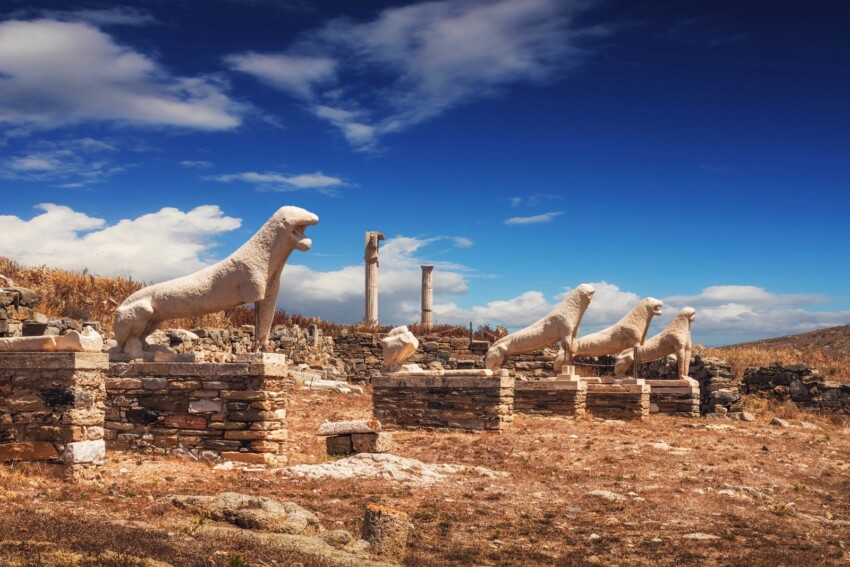
The small island of Delos is part of the Cyclades archipelago and is located near the island of Mykonos. The island, which, according to Greek mythology, was the birthplace of Apollo and Artemis, is now uninhabited and has become an immense archaeological site.
Delos holds many extraordinary monuments: the ancient theatre, remains of temples dedicated to Apollo, the Keraton (altar in honour of Apollo), and the famous Terrace of the Lions, with statues of lions in Naxos marble looking towards the sacred lake where Apollo was born.
The archaeological site is estimated to cover 95 hectares, but to date only 25 hectares have been fully excavated. The site testifies to the importance of Delos as a religious, political and commercial centre of the ancient Aegean world, when it was considered one of the most sacred islands in Greece.
The island can only be reached by sea from Mykonos and is one of the most fascinating archaeological experiences in the Mediterranean, offering a journey back in time over 2,500 years.
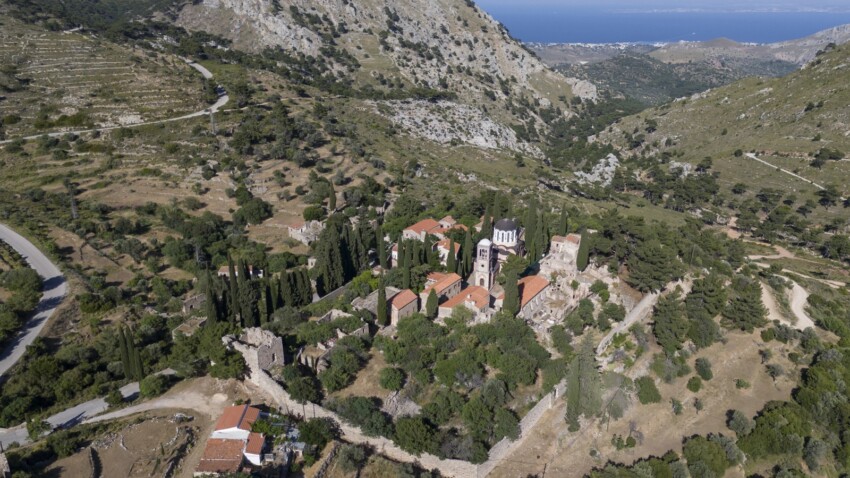
These three monasteries are excellent examples of religious architecture from the central Byzantine period and represent the apogee of Byzantine art in Greece. The octagonal central space, surrounded by a series of niches forming a square, defines a hierarchy of volumes and functions allowing for the implementation of vast iconographic programmes.
The monastery of Daphni is located along the ancient Via Sacra that led from Athens to Eleusis, 11 kilometres west of the Greek capital. First built in the early 6th century to Christianise the area where there were the remains of an ancient sanctuary dedicated to Apollo, it has been remodelled several times over the centuries.
The monastery of Ossios Loukas is located near the town of Distomo, 37 kilometres from Delphi, and houses the tomb of its founder, the hermit Saint Loukas. The main church, a masterpiece of 11th-century Byzantine architecture, features a 9-metre diameter dome supported by a perforated drum with sixteen windows.
The monastery of Nea Moni is located on the island of Chios and was built during the 11th century, consecrated to the Assumption of the Virgin Mary. Despite the damage it has suffered over the centuries, it still preserves extraordinary mosaics that represent some of the best examples of Byzantine art of the Macedonian period.
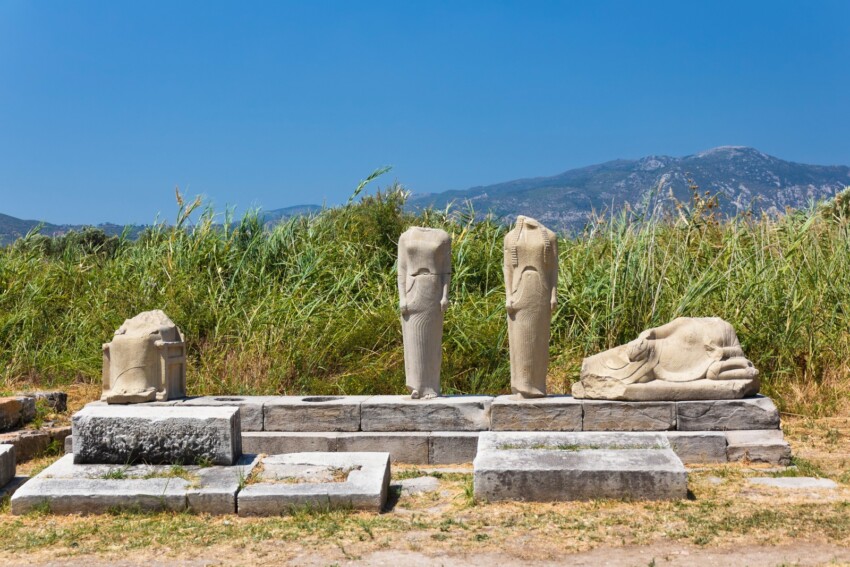
The Pythagoreion and the Heraion are two archaeological sites on the island of Samos in the North Aegean, near the coast of Asia Minor, which testify to the power and wealth of this important Greek island in antiquity.
The Pythagoreion is an ancient fortified harbour overlooking a natural harbour protected by high mountains. The ancient city, which was already an important settlement in the 16th century B.C., included an aqueduct, sewers, public buildings, sanctuaries, agora, Roman baths and private houses.
One of the most famous features of the Pythagoreion is the Eupaline Aqueduct, built in 550 B.C.: a 1,036-metre tunnel through the mountain to supply water to the capital. This masterpiece of ancient engineering was invisible to enemies and therefore could not be destroyed during sieges.
The Heraion is the magnificent sanctuary dedicated to Hera, first built in the 8th century BC. It was the first Greek temple to feature columns around the peristyle and to have a double row of columns at the front. Rebuilt in 570 BC, it had colossal dimensions (80 metres long by 45 metres wide) and introduced the Ionic order into Greek temple architecture.
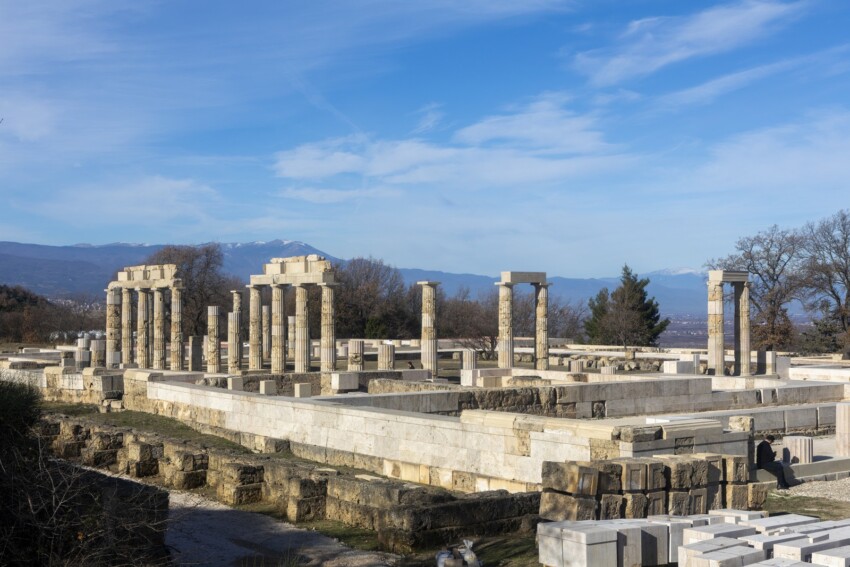
In central Macedonia, near Vergina, lies the ancient city of Aigai, the first capital of the ancient kingdom of Macedonia. Discovered in 1977 by the archaeologist Manolis Andronikos, the site comprises the remains of this great city, including the monumental palace decorated with mosaics and painted stucco.
The most important find is the tomb of Philip II, father of Alexander the Great, an artificial tumulus that has come down to us intact and where one can admire extraordinary frescoes painted with hunting scenes. The tomb has yielded exceptional treasures, including two golden urns containing the bones of Philip II and one of his wives.
In addition to the tomb of Philip II, there are two other royal tombs: the so-called Prince’s Tomb and another very ruined one dating back to the 3rd century BC. The site also includes the remains of the theatre where Philip II was assassinated in 336 BC, an event that paved the way for the conquest of Asia by Alexander the Great.
The museum built above the royal tombs preserves some of the most important artefacts of ancient Macedonian art, including armour, jewellery and ceremonial objects of extraordinary workmanship that testify to the wealth and sophistication of the Macedonian court.
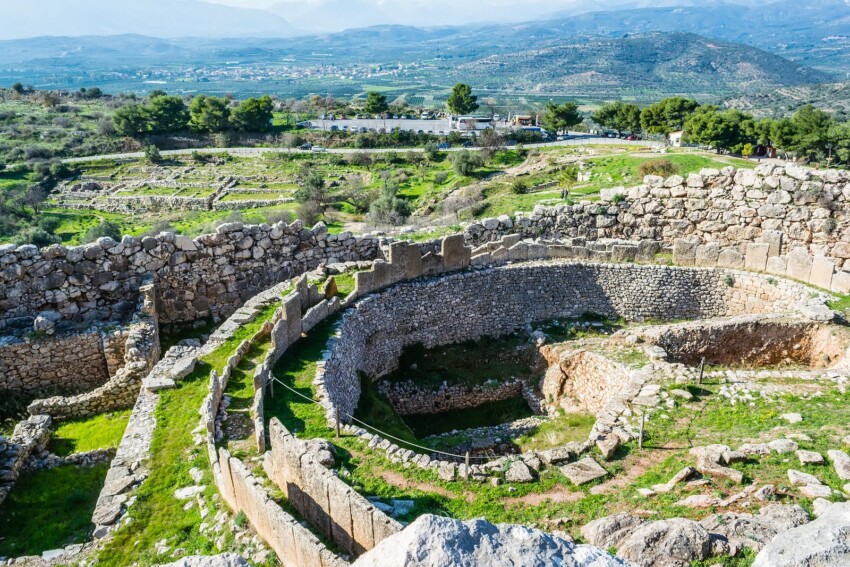
Mycenae and Tiryns are archaeological sites in the Peloponnese that testify to the greatness of the Mycenaean civilisation of the second millennium BC. These fortified centres represent some of the most important examples of Bronze Age military architecture in Greece.
Mycenae, located on the plain of Argos 90 kilometres southwest of Athens, was one of the most important military strongholds of the time. The tombs of several kings, the famous Lion’s Gate – the only European Bronze Age monument with monumental sculpture – and the remains of the royal palace on top of the acropolis were discovered here.
The city is associated with Homeric legends and the figure of King Agamemnon, commander of the Greek expedition against Troy. The imposing Cyclopean walls, built with huge boulders, and the tholos tombs testify to the advanced building technology and wealth of this civilisation.
Tiryns, located a few kilometres from Mycenae, preserves some of the most impressive Cyclopean fortifications of antiquity. The walls, built with colossal stone blocks, surround the remains of the royal palace and demonstrate the incredible engineering skills of the Mycenaeans.
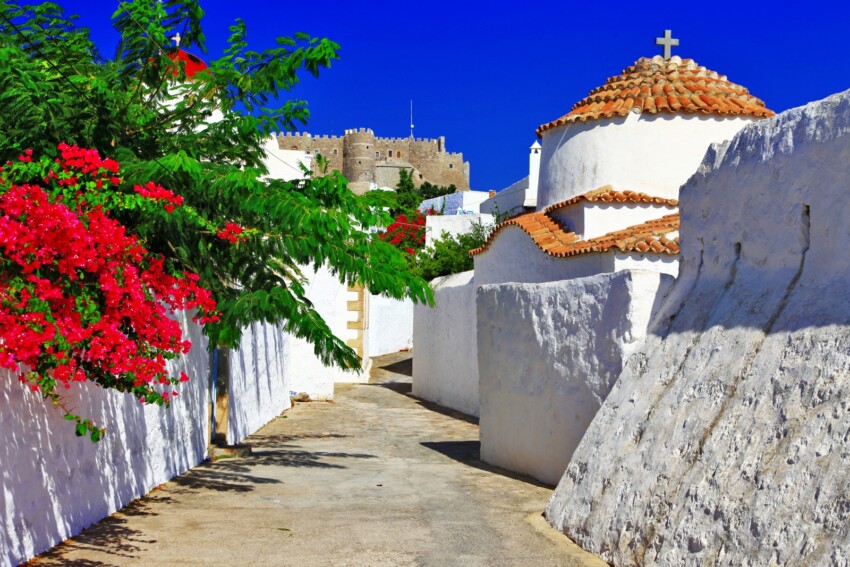
The historic centre of Patmos, or Chorá, is the capital of the island of the same name in the Dodecanese archipelago in the Aegean Sea. This place is an important Christian pilgrimage centre and a site of exceptional artistic interest where religious ceremonies are still practised in the original forms of early Christianity.
The Monastery of St. John the Theologian, founded in 1088 by the monk Christodoulos, dominates the island from its elevated position. This fortified monastery houses an extraordinary library with over 4,000 manuscripts and ancient books, including priceless 5th and 6th century codices.
The Cave of the Apocalypse is the sacred place where, according to tradition, the Apostle John wrote the Gospel and the Apocalypse after receiving divine revelation. The cave, converted into a chapel, still preserves the rock where John is said to have laid his head and hand during his visions.
The architecture of the island and the old town presents unique features that blend Byzantine, medieval and traditional Cycladic elements, creating a harmonious whole of extraordinary beauty. The Cycladic houses, with their elegant façades and inner courtyards, bear witness to the island’s prosperity during the seafaring period.
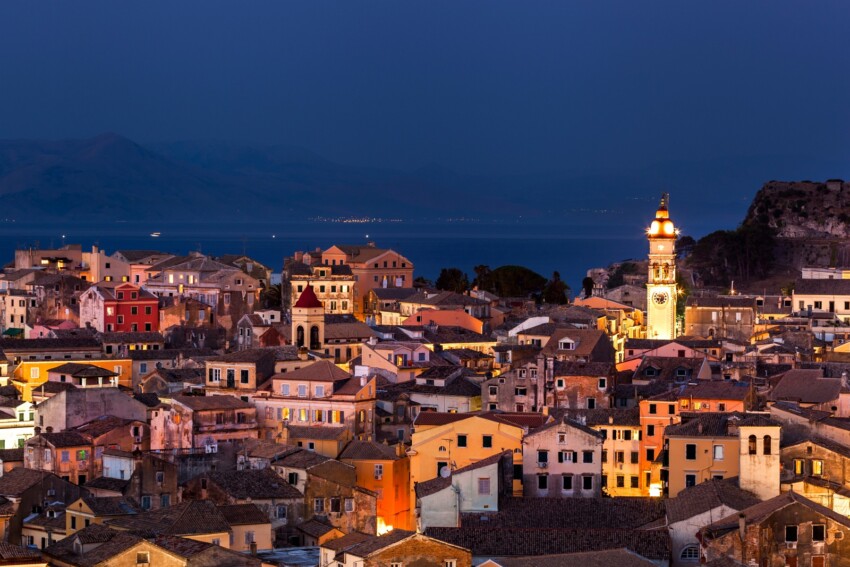
The ancient town of Corfu, or Kerkira, is located in the eastern part of the island of Corfu, overlooking the coast of Albania and mainland Greece. The narrow, winding alleys of the old town hide magnificent small squares where Italian, French, English and Greek architecture blend in perfect balance.
The old town is a unique example of a Mediterranean fortress city, with its three Venetian fortresses – the Old Fortress, the New Fortress and the city walls – bearing witness to centuries of Venetian rule (1386-1797). The urban architecture reflects the different dominations that followed: Venetian, French, British and Greek.
The most fascinating district is the Campiello, full of stone stairways, paved squares and hidden courtyards reminiscent of the Venetian sestieri. The Liston, built under French rule and designed by the engineer Lesseps, has an elegant arcade with restaurants and cafes and is the centre of the island’s social life.
The Palace of St. Michael and St. George is a neoclassical building dating from the British rule that now houses the Asian Art Museum. The Spianada, the largest square in the Balkans, is the heart of the city with its gardens and tree-lined avenues.
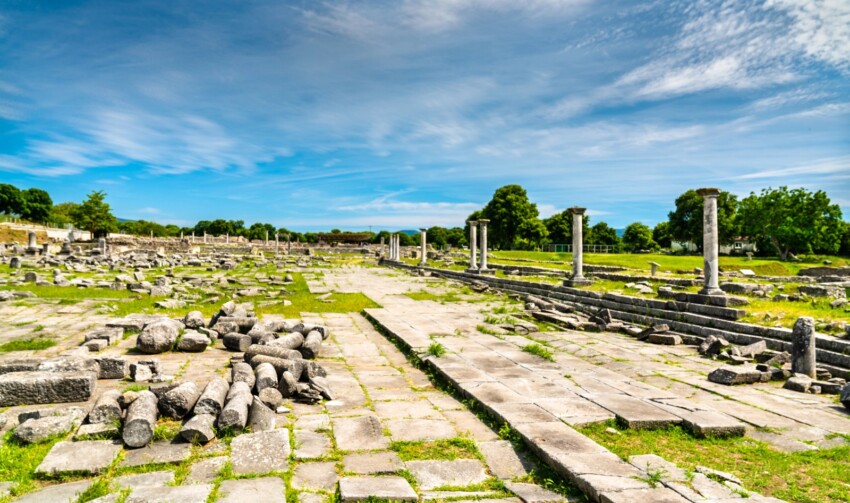
The ancient city of Philippi is located in eastern Macedonia, in northern Greece, along the ancient route that connected Europe to Asia. Conquered by Philip II of Macedon in 356 BC, the city grew rapidly and became an important mining centre thanks to the rich gold mines in the area.
Coming under the control of Rome in 168 BC, the city became famous for the historic battle of 42 BC in which the army of the Republicans Brutus and Cassius was defeated by Mark Antony and Octavian. The latter raised the city to the rank of a colony under the name Colonia Augusta Julia Philippensis.
Philippi is also considered the first European city to be evangelised by St Paul the Apostle around 49-50 AD, an event that marked the beginning of the spread of Christianity in Europe. The remains of numerous early Christian basilicas testify to the importance of the city as a centre of early Christianity.
The archaeological site preserves important remains from the Hellenistic, Roman and early Christian periods, including the Hellenistic theatre, the Roman agora, the city walls and the remains of eight early Christian basilicas showing the architectural and artistic evolution from the 4th to the 6th century AD.
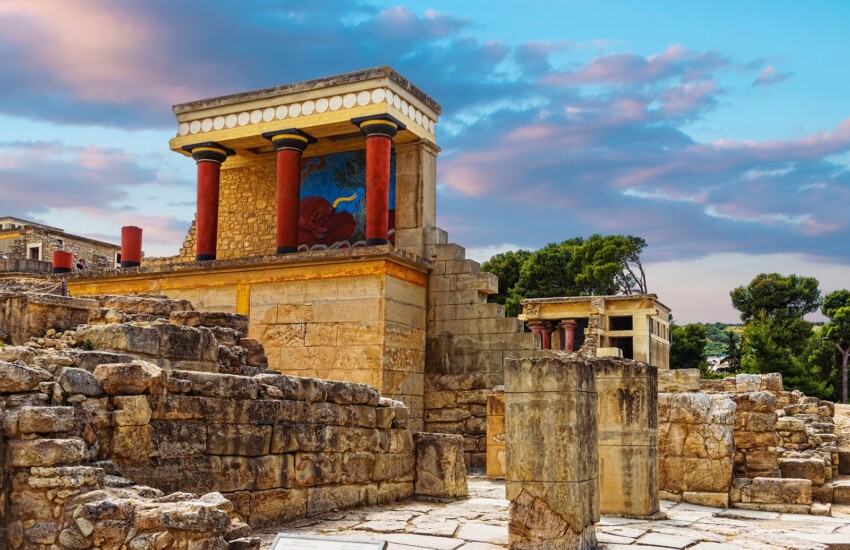
The Minoan Palatial Centres represent the latest and most recent addition to Greece’s UNESCO heritage, recognised in July 2025. This serial site comprises six archaeological sites on the island of Crete that represent the Minoan civilisation, one of the most advanced prehistoric cultures in the Mediterranean.
The sites included are Knossos, Phaistos, Malia, Zakros, Zominthos and Kydonia (Chania), all dating between 1900 and 1100 BC. These palatial centres served as administrative, economic and religious centres, characterised by advanced architecture, complex urban planning and vivid frescoes that constitute masterpieces of ancient art.
The Palace of Knossos, the most famous and largest of the Minoan palaces, is traditionally associated with King Minos and the myth of the Minotaur and the labyrinth. Excavations conducted by Arthur Evans in the early 20th century revealed a complex of extraordinary complexity with advanced hydraulic systems, storerooms, workshops and royal flats decorated with colourful frescoes.
The Minoan palaces reveal primitive writing systems (Linear A and Linear B), extensive commercial maritime networks and cultural exchanges that extended throughout the eastern Mediterranean. Their architecture, with central courtyards, sophisticated drainage systems and naturalistic frescoes, testifies to the achievement of extraordinary levels of civilisation for the time.
This civilisation profoundly influenced the development of later Classical Greek culture and represents one of the oldest roots of European civilisation, making UNESCO recognition a fitting tribute to this extraordinary World Heritage Site.
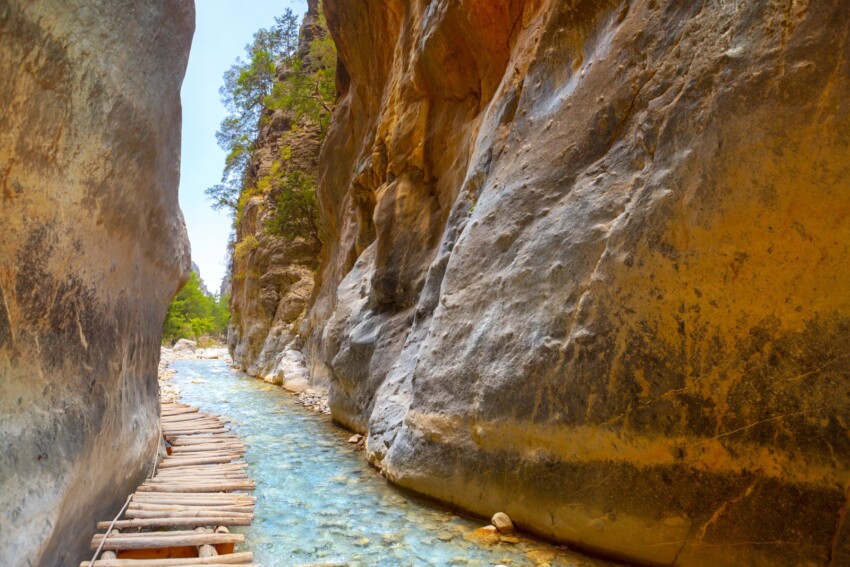
Greece’s tentative list currently includes 12 candidate sites for future inscription on the UNESCO World Heritage List, all of which were nominated in 2014. These sites awaiting evaluation include:
 Hotel
Hotel  Budget accommodations
  Apartments
  Family Hotel
  Luxury Hotel
  Resorts